
Amber vs red lens glasses: stopping melatonin suppression
Amber lenses miss green wavelengths up to 550 nm. Learn why red lenses blocking 400 to 550 nm light protect evening melatonin and circadian timing.
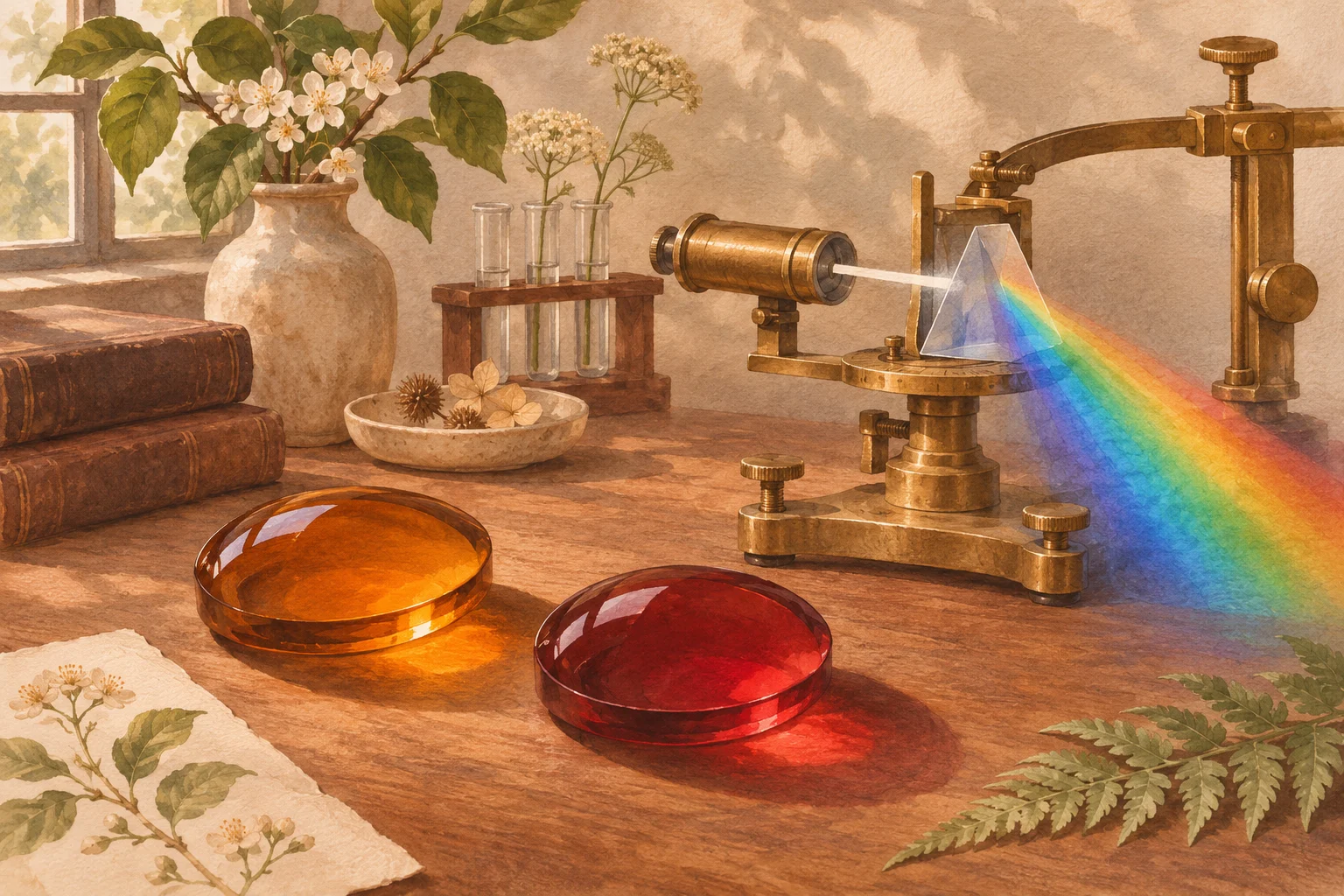
Short answer Amber lenses block blue light between 400 and 480 nanometers, but leave green wavelengths up to 550 nanometers intact. Intrinsically photosensitive retinal ganglion cells respond to both blue and green photons. Red lenses filter out light up to 550 nanometers, preventing evening melatonin suppression when worn two to three hours before sleep.
A handheld spectrometer pointed at a standard residential LED bulb reveals a sharp peak at 450 nanometers followed by a broad secondary plateau between 500 and 580 nanometers. Most people assume that filtering the sharp 450-nanometer blue spike is enough to save their sleep. That assumption falls apart once you look at the broad activation spectrum of the human circadian clock.
Many consumers invest in amber-tinted eyewear thinking it forms an impenetrable shield against evening screen exposure. While amber optics change the subjective color temperature of your environment, they regularly allow green light to reach your retinas in quantities large enough to halt melatonin synthesis. Examining the exact nanometer cutoff reveals why lens pigment choice dictates your nocturnal endocrine profile.
Why does melanopsin respond to green photons alongside blue?
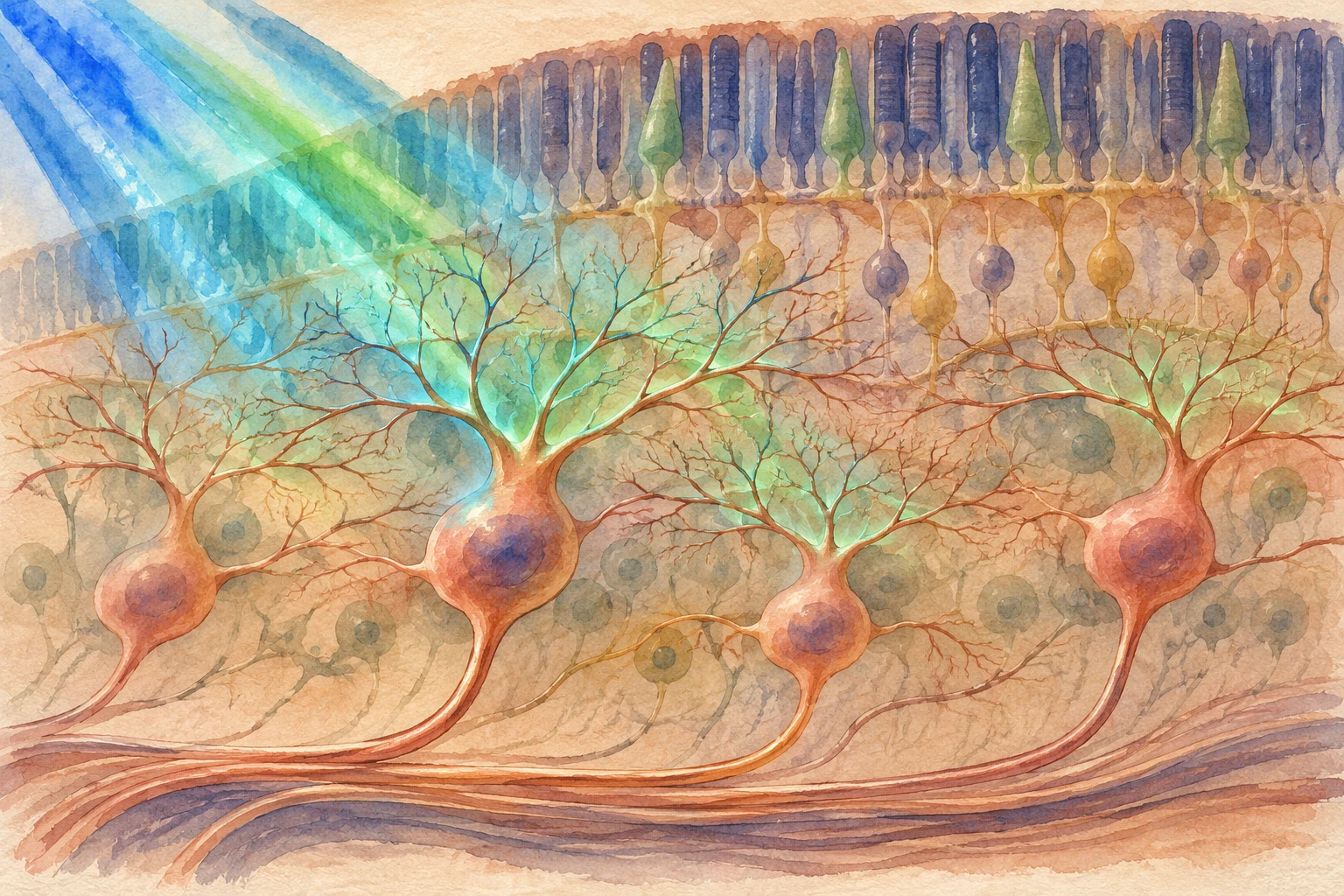
Non-visual light perception does not depend on the rods and cones you use for sharp reading vision. It runs through intrinsically photosensitive retinal ganglion cells, or ipRGCs, which express the photopigment melanopsin. Systematic reviews of the light-eye-body network demonstrate that retinal illumination acts directly on the master biological clock in the suprachiasmatic nucleus [2].
Melanopsin reaches its peak sensitivity at approximately 480 nanometers in the pure cyan-blue band. However, its absorption curve is not a narrow spike. It forms a wide bell shape that spans from 420 nanometers well past 530 nanometers.
If exposed to bright indoor lighting, green photons between 500 and 550 nanometers stimulate these ganglion cells with remarkable efficacy. When those cells fire, they send continuous action potentials along the retinohypothalamic tract, signaling daytime conditions to the brain and shutting down pineal melatonin production.
What wavelengths do amber lenses actually filter out?
Commercial amber glasses are engineered primarily for daytime glare and photophobia. Classic amber formulas, including standard FL-41 tints, cut transmission sharply between 400 and 460 nanometers while allowing comfortable transmission of longer wavelengths. Clinical trials evaluating FL-41 lenses show measurable reductions in sensory nerve activation and light-induced ocular pain by dulling this specific blue boundary [1].
These filtered boundaries also influence photophobia pathways involving trigeminal nociceptors and thalamic projections [3]. For eye strain and screen fatigue at 2:00 PM, an amber tint is genuinely useful. As discussed in our analysis of blue light glasses sleep evidence, daytime glare reduction serves a completely different physiological objective than evening circadian protection.
Spectrophotometer readings of typical amber lenses show transmission rising steeply right around 480 to 490 nanometers. By the time light reaches 510 nanometers, amber glasses frequently let 60 to 80 percent of photons pass through. Your eyes absorb massive amounts of green light from television screens, kitchen downlights, and phone displays despite the warm yellow cast.
How do red lenses prevent evening melatonin suppression?
True circadian red lenses use an entirely different optical cutoff. Instead of stopping at 480 nanometers, high-grade red dye absorbs all photons from 400 nanometers through roughly 550 nanometers. Only the longer, non-stimulatory red and deep amber wavelengths above 570 nanometers pass through the lens matrix.
Because melanopsin sensitivity drops to near zero past 560 nanometers, red lenses render your lighting invisible to your circadian clock. You can read, walk around your home, or look at an electronic display without triggering the daytime firing sequence of your ipRGCs.
Studies testing salivary melatonin levels show that volunteers wearing lenses that block blue and green light maintain normal nocturnal melatonin curves under room light. Those wearing clear or mild amber lenses experience significant hormone suppression and a delayed circadian phase shift. For evening screen use, our sleep-blocker-glasses use deep red lenses that block 99 percent of both blue and green light up to 550 nanometers to preserve that biological rise.

How does lens filtration compare across the visible spectrum?
Understanding lens performance requires looking at specific nanometer bands rather than marketing claims. Different tints solve completely different biological problems.
| Lens Tint | Wavelength Range Blocked | Green Light (500 to 550 nm) Blocked | Primary Biological Effect |
|---|---|---|---|
| Clear Computer Lenses | 400 to 455 nm (partial) | 0% | Slight glare reduction; zero melatonin protection |
| Amber or FL-41 Lenses | 400 to 480 nm | 10% to 25% | Relieves photophobia and daytime eye strain |
| Deep Red Circadian Lenses | 400 to 550 nm | 98% to 100% | Prevents evening melatonin suppression entirely |
If your goal is simply reducing glare while working on text documents, reading on an electronic paper display offers optical benefits without heavy tints, as we explored when looking at e-ink vs phone screen eye strain. But once the sun goes down, spectral transmission matters far more than contrast ratio.
When should you put on red lenses before sleeping?
Timing determines the efficacy of red lens filtration. Human melatonin production does not spike the moment your head hits the pillow. It begins rising roughly two hours before your natural sleep window, a biological milestone known as dim light melatonin onset.
Putting red lenses on 120 to 180 minutes before your target bedtime shields this natural endocrine curve. If you turn on overhead bathroom lights or check email without protection during this period, even brief exposure to 520-nanometer photons can blunt the hormone surge by 50 percent.
Keep the glasses on until you turn off the final bedroom lamp. Pair them with dim ambient lighting set below 50 lux throughout the house. By denying green and blue photons access to your melanopsin receptors, you allow your brain to register nightfall long before you close your eyes.
Common questions
Why are amber lenses insufficient for complete melatonin protection?
Amber lenses usually stop blocking light around 480 to 490 nanometers. Green light between 495 and 550 nanometers still stimulates melanopsin and suppresses pineal melatonin secretion.
Which wavelengths must be blocked to prevent melatonin suppression?
Eyewear must block photons from 400 to roughly 550 nanometers. This spectrum covers both high energy violet blue and the green band that stimulates intrinsically photosensitive retinal ganglion cells.
When should you put on red lens glasses in the evening?
Put them on approximately two to three hours before your planned bedtime. This window corresponds to your biological dim light melatonin onset, ensuring the hormone rises without light induced delays.
Do clear computer glasses protect evening sleep?
No, clear lenses only attenuate roughly 10 to 20 percent of blue light around 415 to 455 nanometers. They do not prevent circadian phase delays or nocturnal melatonin suppression.
Mentioned in this article
 From the shop
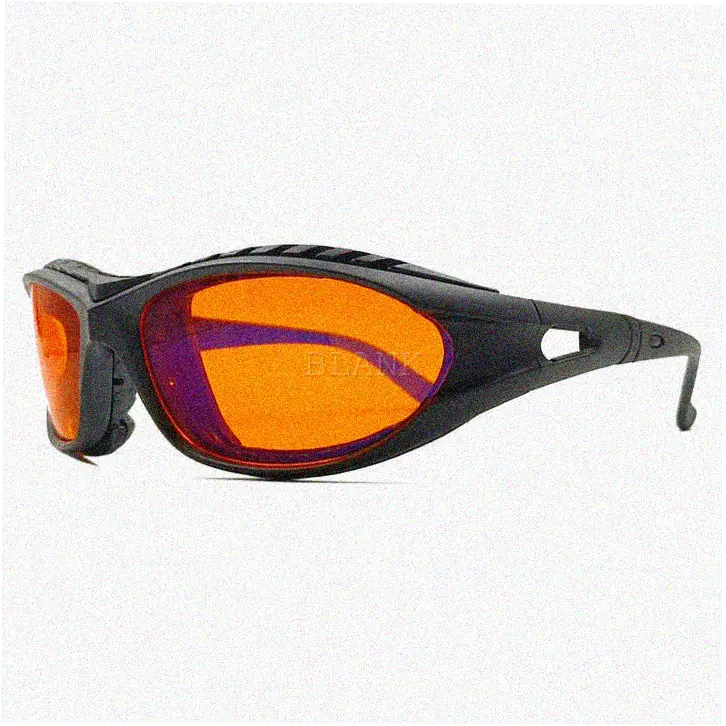
Evening Sleep Blocker Glasses
Red lens. Blocks 99% of blue and green light in the 2 to 3 hours before bed. The tool behind our sleep protocol.
See it →₹5,413