
Overnight chocolate chia seed pudding with monk fruit for flat glucose
Prepare overnight chocolate chia seed pudding delivering 11g soluble fiber and zero sugar to stabilize morning glucose curves and support gut barrier integrity.
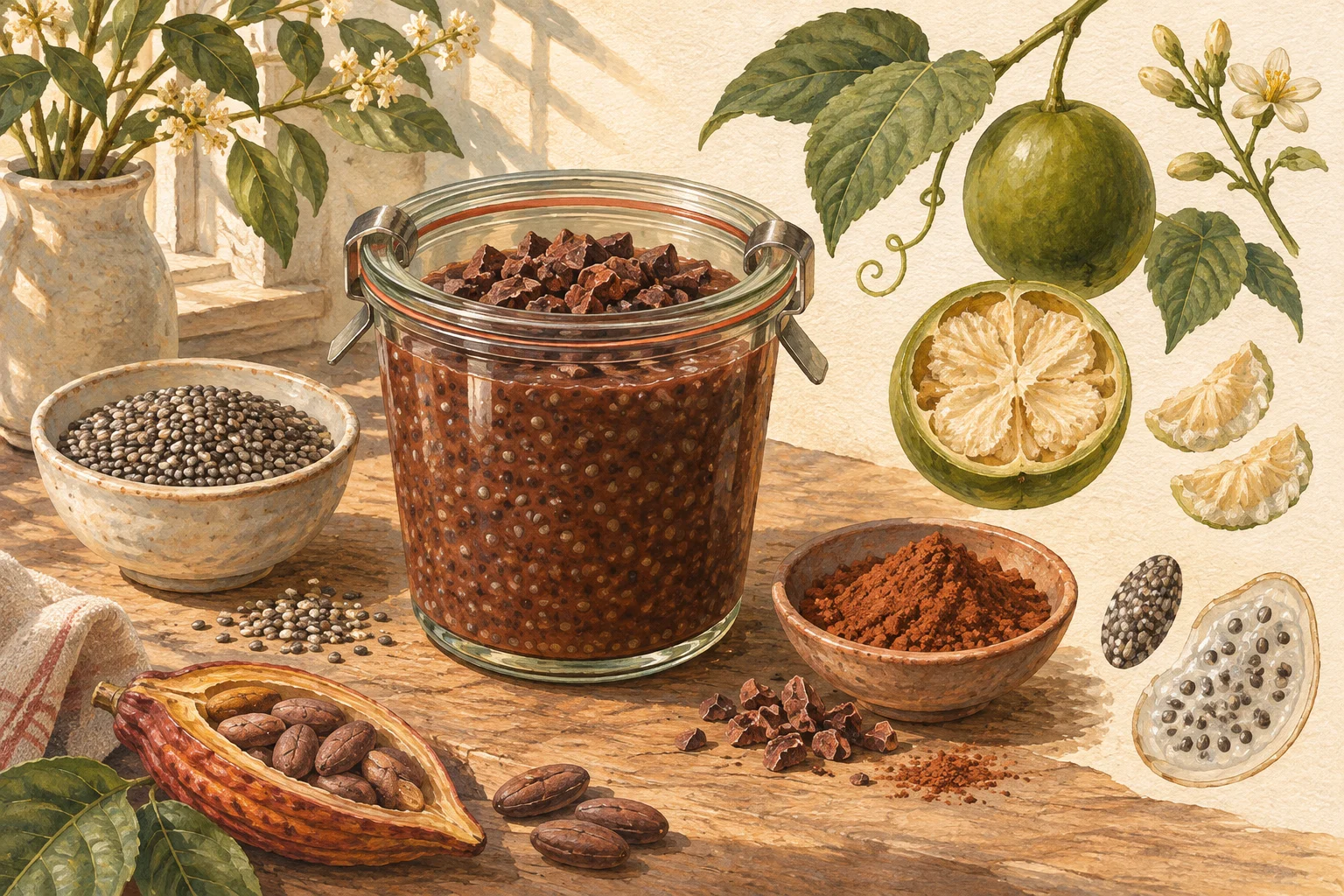
Short answer Overnight chocolate chia seed pudding blunts morning glucose excursions through 11g of soluble fiber from Salvia hispanica mucilage. This water-soluble polysaccharide forms a viscous hydrogel in the stomach, delaying gastric emptying and slowing carbohydrate absorption. Sweetened with zero-glycemic monk fruit, it delivers rich cocoa flavanols without triggering insulin secretion.
26g protein · 8g net carbs · 310 cal · 10 min prep
At 06:30, continuous glucose monitors often register an unprompted 20 mg/dL climb before breakfast. This dawn phenomenon reflects cortisol-driven hepatic glucose output, not dietary failure. Countering that early surge requires a breakfast that mechanically delays gastric emptying rather than dumping fast starch into an already insulin-resistant morning bloodstream.
Chia seeds contain approximately 34g of total dietary fiber per 100g, with soluble mucilage accounting for roughly one-third of that mass [2]. When combined with rich cocoa powder and zero-glycemic monk fruit, this overnight recipe produces a dense breakfast delivering 11g of functional soluble fiber per serving. It flattens the postprandial glucose curve without sacrificing the pleasure of dark chocolate.
How does chia seed mucilage blunt morning blood glucose spikes?
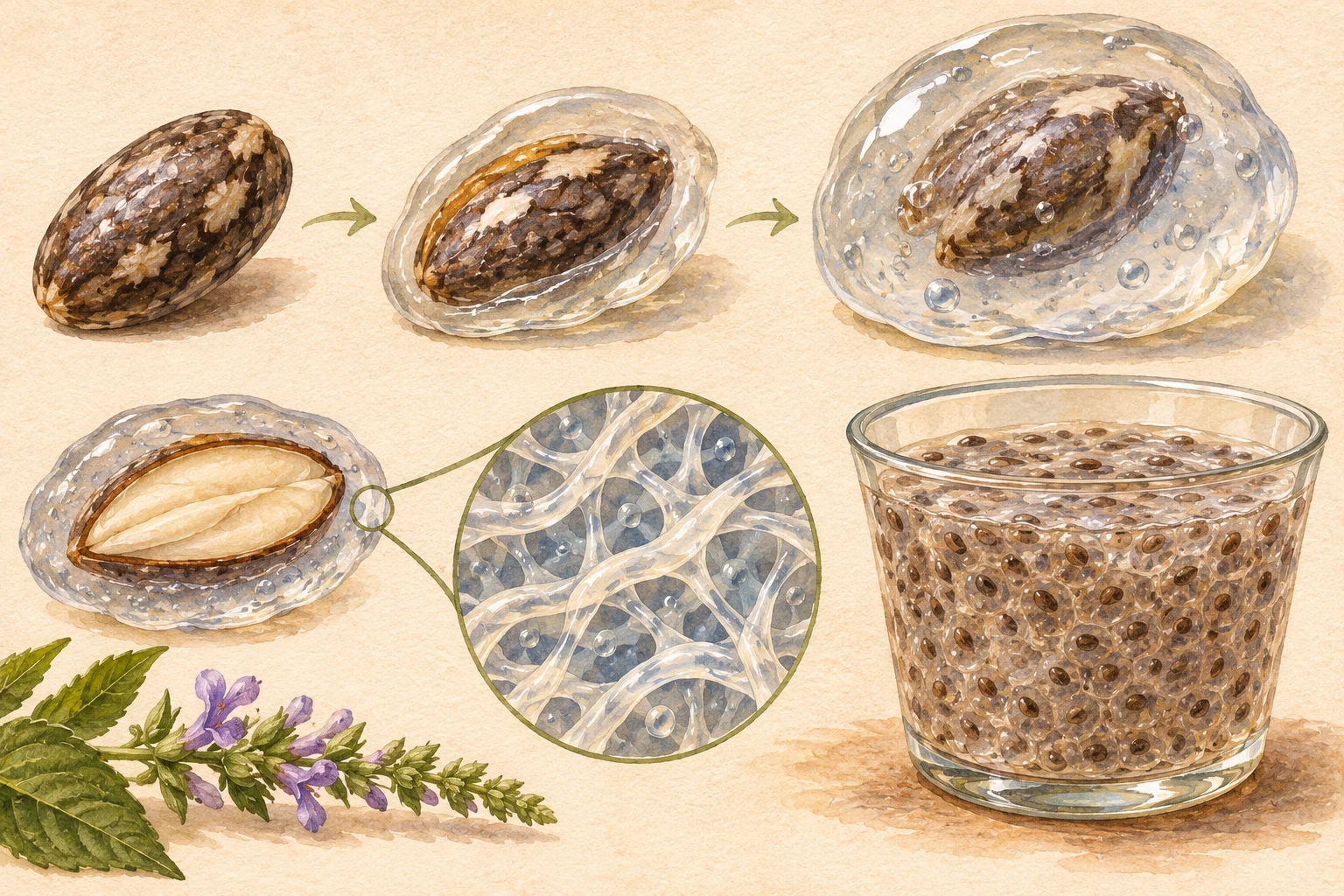
The outer seed coat of Salvia hispanica is covered in a specialized layer of polysaccharide cells that extrude a clear mucilage upon contact with water [2]. This mucilage is composed primarily of d-xylose, d-mannose, and d-galacturonic acid, forming a high-molecular-weight branched arabinoxylan network. When hydrated, it swells up to twelve times its dry weight, creating a cohesive hydrogel matrix.
In the stomach and duodenum, this hydrogel acts as a physical barrier. It increases the viscosity of chyme, which slows the rate at which gastric contents pass through the pyloric sphincter into the small intestine. It also physically traps digestive enzymes like alpha-amylase and brush-border disaccharidases, restricting their access to carbohydrate molecules. Randomized crossover trials confirm that Salba-chia seeds significantly reduce postprandial glycemia and prolong subjective satiety compared to control meals [3].
Because the rate of carbohydrate diffusion toward intestinal enterocytes is sharply reduced, systemic glucose absorption shifts from a steep, narrow spike to a low, sustained plateau. This mechanical moderation prevents reactive hypoglycemia, protecting morning cognitive focus and metabolic stability.
What happens to gut transit when cocoa polyphenols meet soluble fiber?
Soluble fiber does not act in isolation. Raw cacao powder brings a dense payload of flavan-3-ols, catechin, and epicatechin into the mixture. Much like how cocoa flavanols improve vascular tone through endothelial nitric oxide synthesis, these compounds also modulate the intestinal lumen by interacting directly with the microbial community.
Unabsorbed cocoa polyphenols and chia mucilage travel together into the ascending colon. Chia seed mucilage possesses remarkable cross-linking properties, capable of protecting delicate microstructures and surviving challenging processing environments [1]. In the large intestine, commensal bacteria such as Bifidobacterium and Faecalibacterium prausnitzii ferment these complex polysaccharides into short-chain fatty acids, specifically acetate, propionate, and butyrate.
Butyrate acts as the primary energetic fuel for colonic epithelial cells, tightening intercellular claudin and occludin junction proteins. Meanwhile, circulating propionate travels to the liver via the portal vein, where it downregulates gluconeogenesis. The combination of cacao flavanols and cross-linked mucilage transforms a simple pudding into a targeted tool for intestinal integrity and glycemic defense.
| Breakfast meal | Net carbs | Soluble fiber | Protein | Peak 2-hour delta |
|---|---|---|---|---|
| Steel-cut oats with honey (1 cup) | 48g | 3g | 6g | +42 mg/dL |
| Vanilla Greek yogurt with banana | 34g | 1g | 15g | +31 mg/dL |
| Commercial chocolate chia pouch | 18g | 4g | 4g | +19 mg/dL |
| Overnight chocolate chia with monk fruit | 8g | 11g | 26g | +3 mg/dL |
Why does monk fruit protect insulin sensitivity better than sugar alcohols?
Traditional pudding recipes rely on maple syrup, dates, or brown sugar, all of which introduce free glucose and fructose that overpower the viscous fiber barrier. Many low-carbohydrate alternatives substitute high amounts of sugar alcohols like maltitol or erythritol. While these compounds lower net carbohydrate counts, high doses can induce osmotic diarrhea and abdominal cramping by drawing fluid into the intestinal lumen.
Monk fruit extract relies on mogrosides, particularly mogroside V, which are cucurbitane-type triterpene glycosides. These molecules taste between 250 and 300 times sweeter than sucrose without interacting with human sweet taste receptors in ways that provoke insulin secretion. Because mogroside V is intensely sweet at milligram thresholds, it does not bulk the bowel with unabsorbed polyols.
We sweeten this formulation with blank-zero, which provides pure monk fruit intensity without bitter aftertastes or hidden fillers like dextrose and maltodextrin. Unlike artificial sweeteners that can disrupt microbial balance in the cecum, mogrosides pass through the upper gastrointestinal tract without triggering glycemic or insulinemic responses. If you enjoy this flavor profile for evening prep, our high-protein cottage cheese chocolate mousse uses a similar metabolic rationale.
How do you assemble the pudding for optimal gel viscosity?
Chia seeds are naturally hydrophobic on their dry outer shell. If you dump them directly into cold liquid without mechanical agitation, they form dense, gelatinous clumps with dry, unhydrated cores. These unhydrated pockets pass through the digestive system without creating the continuous viscous hydrogel needed to slow gastric emptying.
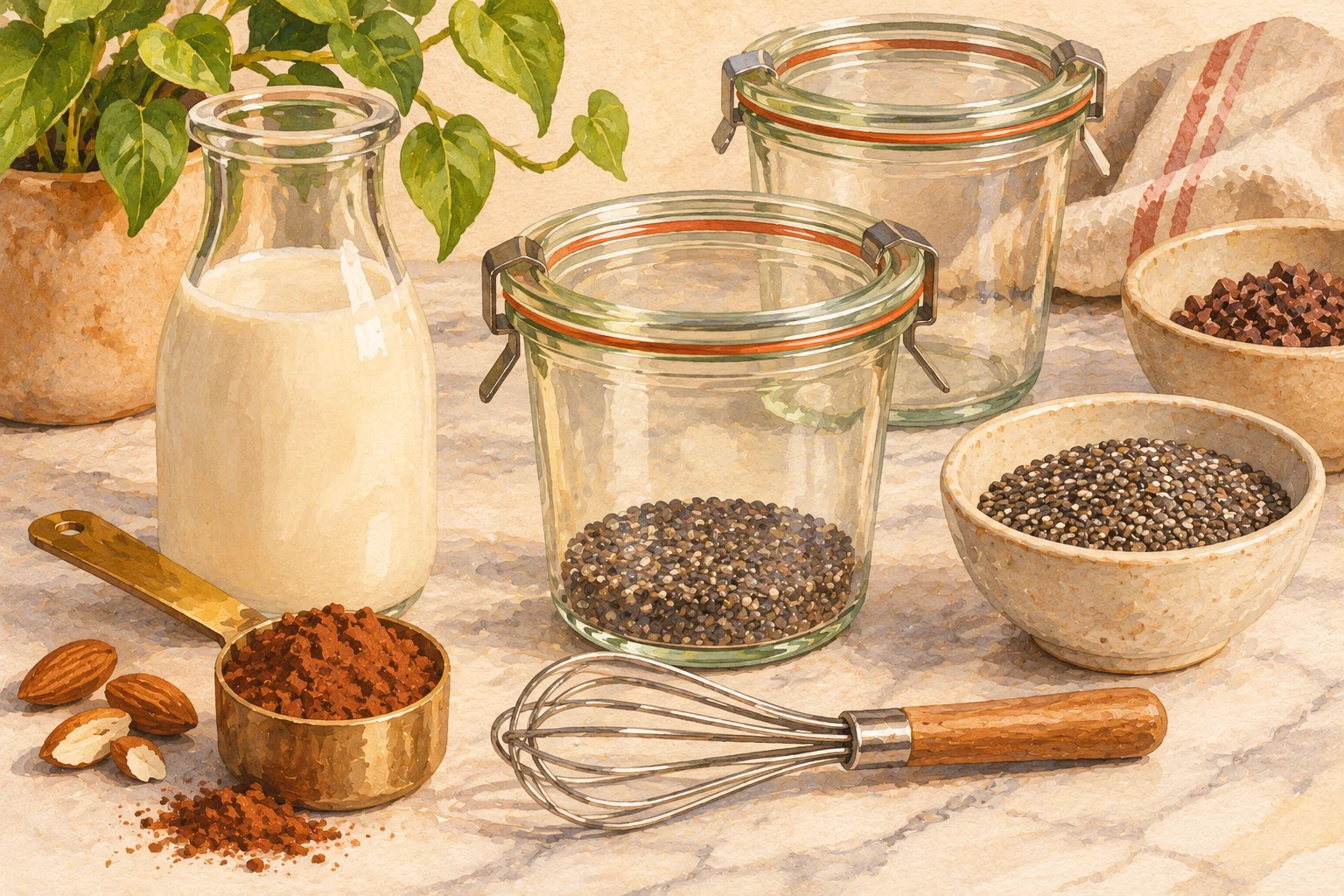
The proper protocol requires two distinct whisking stages separated by ten minutes. First, blend the cacao, protein powder, cinnamon, salt, and monk fruit sweetener into the liquid until completely suspended. Next, whisk in the chia seeds and leave the bowl on the counter. During the first ten minutes, the seeds begin absorbing fluid and releasing mucilage polysaccharides [2].
A second, vigorous 30-second whisk at the ten-minute mark breaks up settling seeds and redistributes the emerging gel evenly throughout the emulsion. Transfer the mixture to glass jars and chill overnight at 4 degrees Celsius. By morning, the seeds achieve full hydration, yielding a uniform pudding that maintains a flat glucose response from the first spoonful.
Common questions
Can I use ground chia seeds instead of whole seeds for this pudding?
Yes. Ground chia seeds hydrate in under 15 minutes and produce a smoother, mousse-like consistency. However, grinding exposes the polyunsaturated omega-3 fatty acids to rapid oxidation, so grind them fresh or store the pre-ground meal in an airtight, opaque container in the freezer.
How does this pudding compare to other breakfast options for dawn phenomenon spikes?
Standard breakfast foods like oatmeal or fruit smoothies introduce rapidly digestible carbohydrates when cortisol and growth hormone have already reduced insulin sensitivity. This recipe provides zero added sugars, 26g of protein, and 11g of soluble fiber to stabilize glycemic excursions.
Why does monk fruit avoid the digestive distress caused by erythritol?
Monk fruit derives its sweetness from mogroside V, a terpene glycoside that passes through the upper digestive tract unabsorbed without drawing excess water into the colon. Unlike sugar alcohols, it does not require high gram-weight dosing, avoiding osmotic diarrhea and bacterial gas production.
How long will this overnight pudding keep in the refrigerator?
The prepared pudding stays fresh for up to 5 days stored at 4 degrees Celsius in an airtight glass container. The antioxidant flavanols in the cocoa powder and natural polyphenols in the chia seeds help protect the fats from premature lipid oxidation.
Mentioned in this article
 From the shop
BLANK ZERO Monk Fruit Sweetener
50g delivers the sweetness of 250g sugar. Zero glycemic impact, lab tested, FSSAI certified.
See it →₹400