
Do blue light glasses actually help you sleep? What the studies say
The evidence is narrower than the marketing. Here is what blue light glasses can and cannot do, and where the melatonin research actually points.
Short answer Evening light between roughly 446 and 550nm suppresses melatonin, and that part is well established. Whether glasses fix it depends on the lens: clear daytime “computer” lenses block only a slice below 430nm, while amber or red lenses that cover 400 to 550nm target the wavelengths that actually matter for sleep onset.
The honest version of this article starts with a confession: the marketing for blue light glasses ran far ahead of the evidence. We sell these glasses, and we still think most of the category oversells itself. So here is what the research actually supports, and where it does not.
What does evening light do to melatonin?
This part is not controversial. In a 2011 study, healthy adults exposed to ordinary room light before bedtime showed suppressed melatonin onset and shorter melatonin duration compared to dim light. [1] The photoreceptor responsible, melanopsin in retinal ganglion cells, peaks in sensitivity around 480nm, solidly in the blue range. [2]
A second study made it concrete: people who read on a light-emitting iPad before bed took longer to fall asleep, had reduced evening melatonin, and felt less alert the next morning than the same people reading a printed book. [3]
So why did the big review find no benefit?
In 2023, a Cochrane review pooled the trials on blue-light filtering lenses and found no significant improvement in visual performance, no clear sleep benefit, and no evidence of harm either. [4]
The catch is in which lenses were tested. Most trials used clear or lightly tinted lenses that filter mainly below 430nm. That misses the melatonin-sensitive zone. Blocking 20% of light at 420nm does very little to a photoreceptor that cares about 480nm.
Which lens color matters for sleep?
| Lens | Blocks below | Covers 480nm peak | Daytime usable |
|---|---|---|---|
| Clear computer lens | 400 to 430nm | No | Yes |
| Yellow lens | 450 to 480nm | Partially | Yes |
| Amber lens | 500 to 530nm | Yes | Distorts color |
| Red lens | 550nm+ | Yes, fully | No |
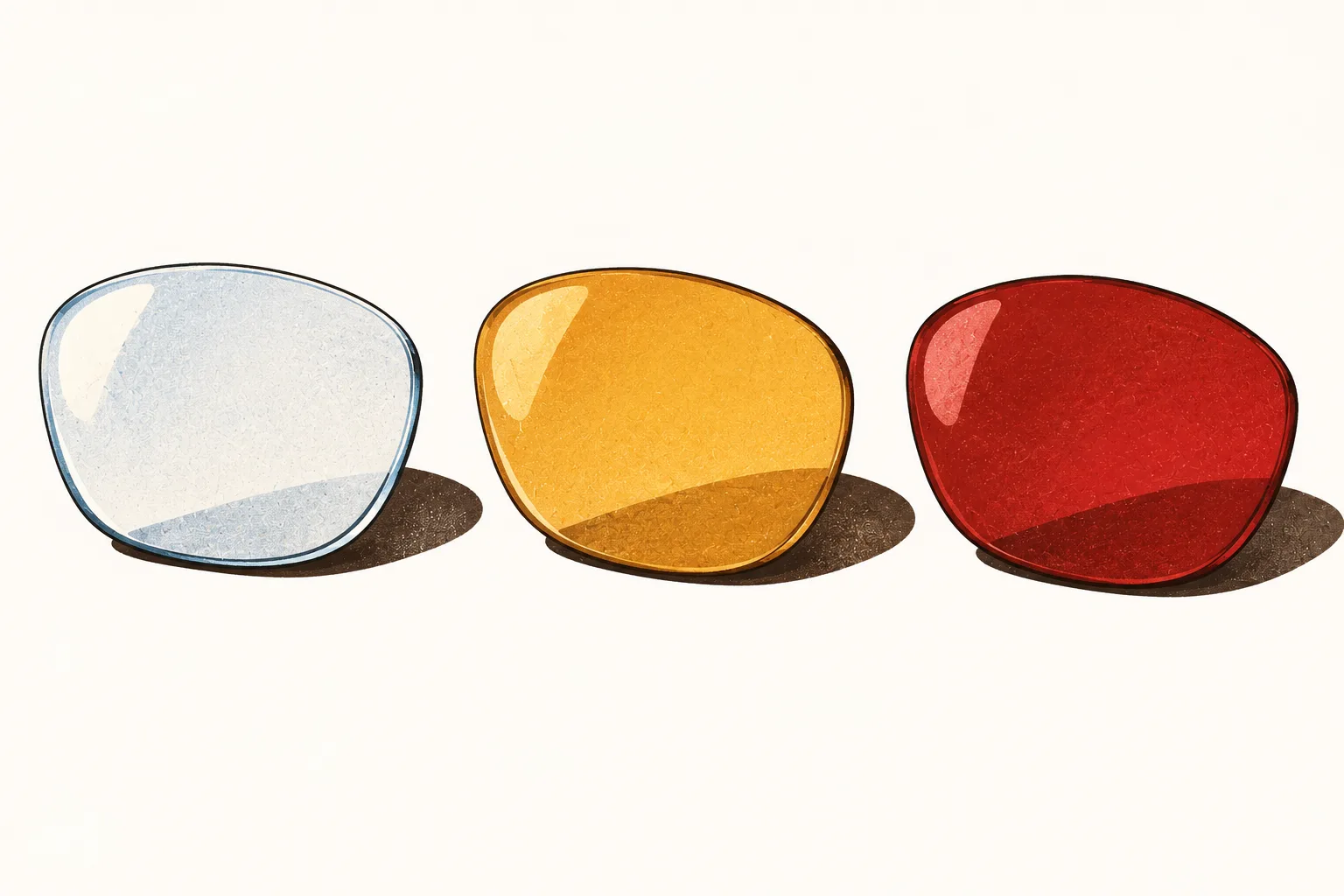
The physics is simple. If the goal is protecting evening melatonin, the lens has to cover the wavelengths melanopsin responds to. A clear lens cannot do that. A red lens does it almost completely, which is why serious evening-blocker glasses look the way they do.
What do we actually do at night?
Two hours before bed, red lenses go on and overhead lights go off. Phone brightness down, or better, phone down. It is not a clinical protocol; it is what the papers point to, run through the filter of what a normal person will actually keep doing.
And the honest caveat: glasses are a smaller lever than light itself. Dim the room, drop the screens, and the lenses matter less. We sell them anyway because most people will not dim their house at 8pm. Reasonable compromise beats perfect protocol nobody follows.
Common questions
Do blue light glasses improve sleep quality?
Evidence is mixed. A 2023 Cochrane review found no clear sleep benefit from typical blue-filtering lenses in controlled trials. Heavier evening blocking of the 400 to 550nm range has a stronger theoretical basis, but large trials are still limited.
What time should I put on sleep-blocking glasses?
The studies on evening light and melatonin point to the last 2 to 3 hours before bed as the window that matters. Wearing them all day is not what the research tested.
Is blue light bad for your eyes during the day?
Current evidence does not show that screen-level blue light damages eyes. Digital eye strain is mostly about reduced blinking and sustained focus, not blue wavelengths.
Are amber and red lenses different?
Yes. Amber lenses typically cut light below about 500 to 530nm. Red lenses block deeper into the green range, up to about 550nm, which covers more of the melatonin-sensitive band.
Mentioned in this article
 From the shop
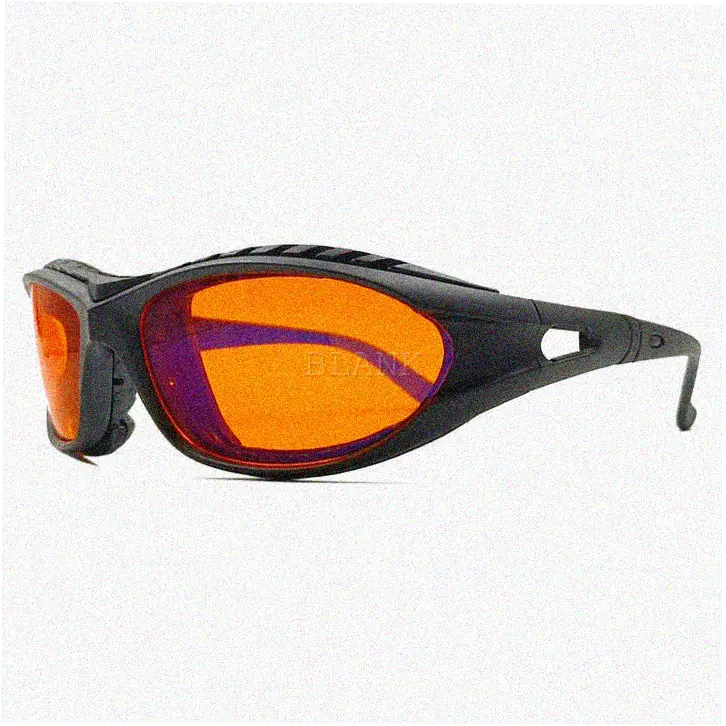
Evening Sleep Blocker Glasses
Red lens. Blocks 99% of blue and green light in the 2 to 3 hours before bed. The tool behind our sleep protocol.
See it →₹5,413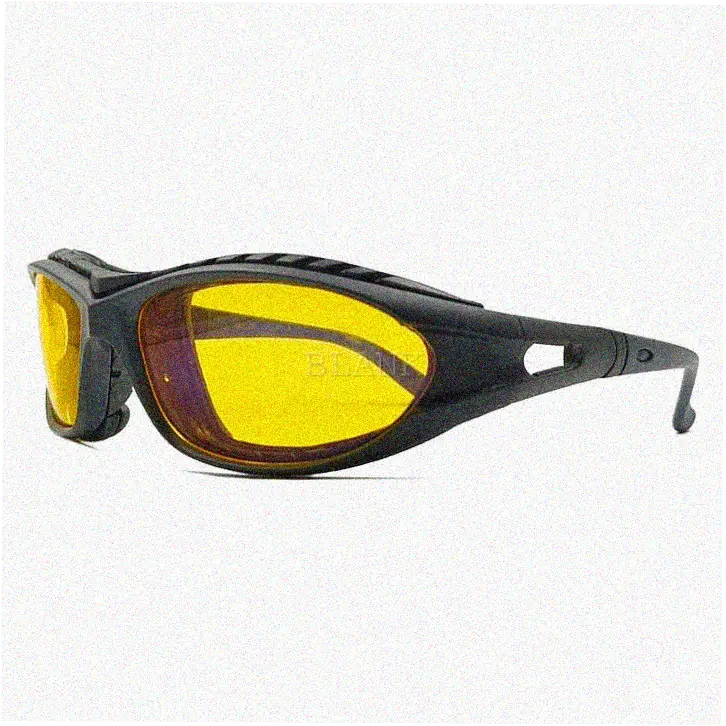 From the shop
YellowLight DayLight Glasses
Blue-light filtering with enhanced contrast for high-focus daylight hours at a screen.
See it →₹5,413