
Monk fruit vs stevia vs erythritol: which one actually works in chocolate
We make chocolate with all three. Here is what each sweetener does to taste, texture, and blood sugar, with the numbers from our own batches.
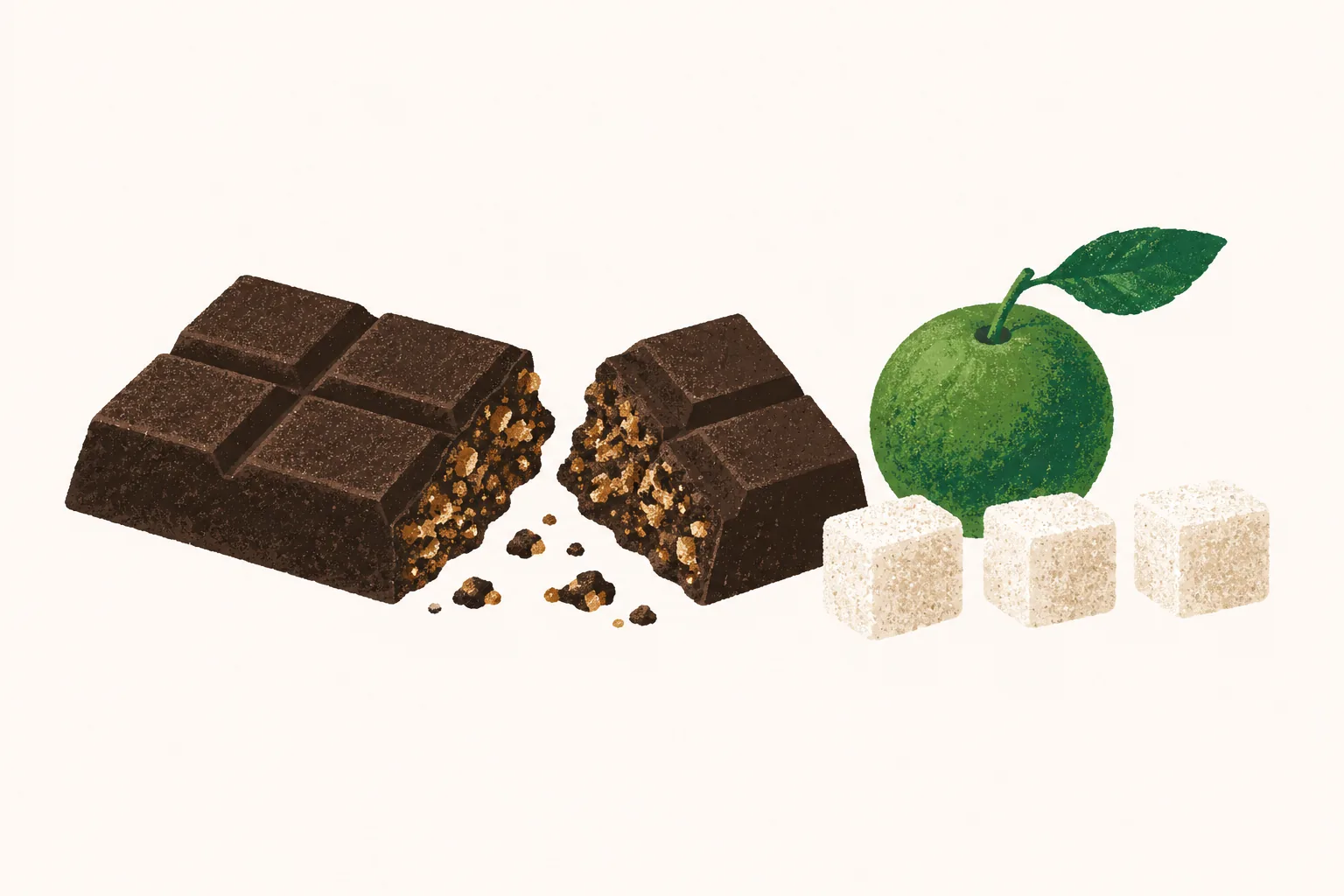
Short answer For homemade chocolate, a monk fruit and erythritol blend beats either alone: monk fruit brings clean sweetness with a glycemic index of 0, erythritol replaces sugar’s bulk, and stevia works best as a background note under 0.1% rather than the main sweetener.
Monk fruit is sweet. Really sweet. The concentrated extract runs roughly 100 to 250 times sweeter than table sugar, which sounds brilliant until you try to measure it into a batch of ganache.
The problem was never sweetness. Sugar does four jobs in chocolate: it sweetens, it adds bulk, it carries flavor, and it controls snap. Replace it and you have to replace all four. That is the part most sugar-free recipes skip.
What does each sweetener actually do to blood sugar?
All three sit at or near zero on the glycemic index, but for different reasons. Mogrosides in monk fruit pass through the gut unabsorbed. Stevia’s glycosides break down in the colon, not the bloodstream. Erythritol is absorbed but mostly excreted unchanged in urine.
There is real data behind this. In a 2017 crossover study, men who drank monk fruit, stevia, or aspartame-sweetened beverages showed no meaningful difference in post-meal glucose or insulin compared to each other, and all three produced lower glucose excursions than sucrose. [1]
| Sweetener | Glycemic index | Relative sweetness | Bulk replacement | Off-note risk |
|---|---|---|---|---|
| Monk fruit extract | 0 | 100 to 250x sugar | None | Slight fruity edge |
| Stevia (Reb A) | 0 | 200 to 300x sugar | None | Bitter, licorice tail |
| Erythritol | 0 | 0.7x sugar | Near 1:1 by weight | Cooling sensation |
| Table sugar | 65 | 1x | Reference | None |
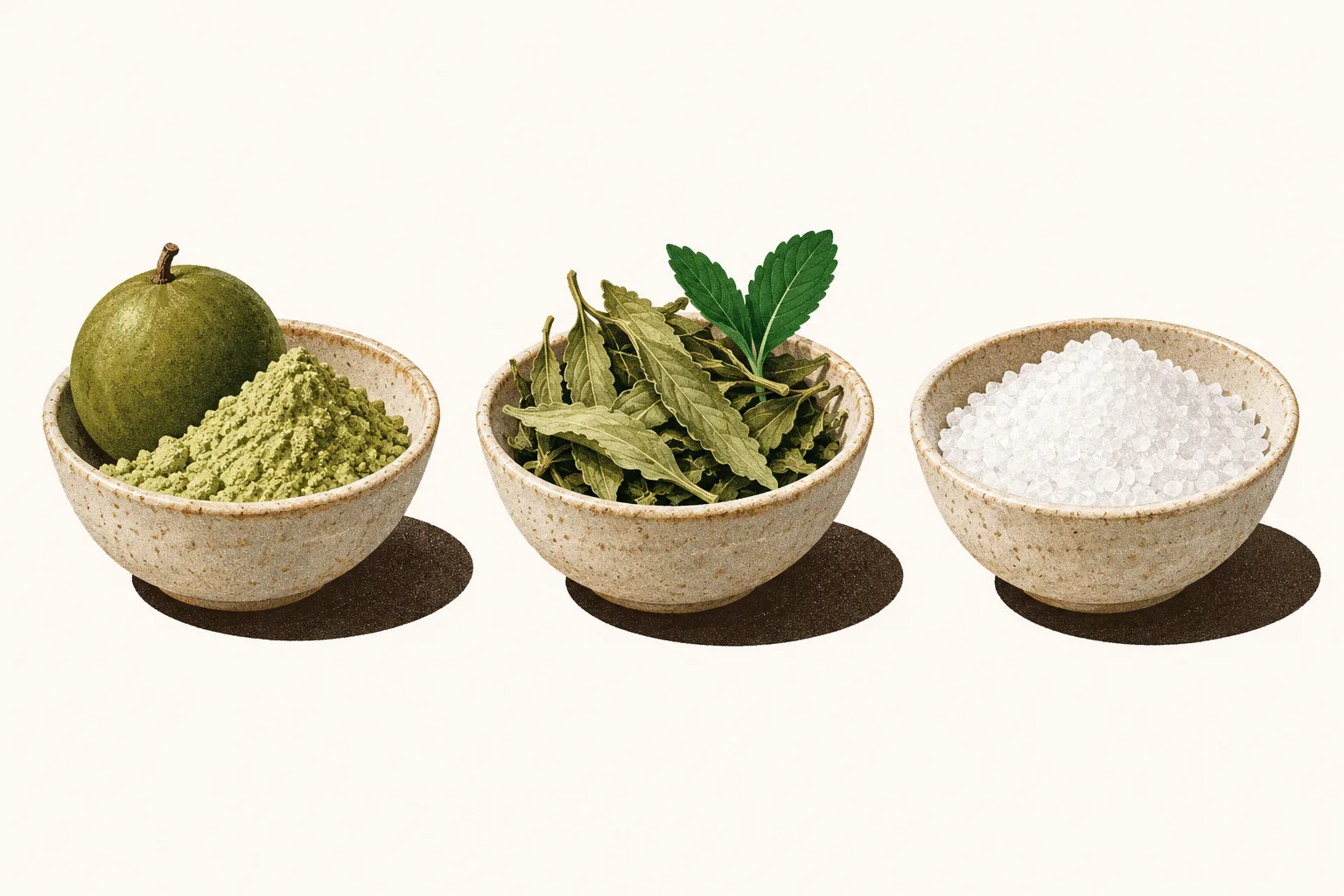
Why does sugar-free chocolate turn out chalky?
Because removing sugar removes about half the bar’s mass. Pure high-intensity sweeteners weigh almost nothing, so a recipe that swaps 50g of sugar for 1g of stevia has thrown away texture, not just sweetness.
Our fix was unglamorous: replace sugar’s weight with erythritol and cocoa butter, then dose monk fruit and a small amount of stevia on top for the sweetness curve. It took about a dozen test batches before the snap sounded right. The first ones bent instead of breaking, which is a texture problem, not a sweetness problem.
Where does brown sugar still earn its place?
In anything where molasses flavor is the point. Cookies, caramel, anything baked dark. We keep a bag on the shelf for exactly that reason; “lower sugar” does not have to mean “no sugar ever.” If the recipe leans on caramelization, use the real thing and cut the portion elsewhere.
The honest bottom line
Monk fruit and erythritol together get you 90% of the way to real chocolate texture with zero glycemic load. Stevia helps in small amounts and hurts in large ones. And none of this turns chocolate into health food. It turns it into chocolate without the sugar spike. For some people, that is the whole point.
Common questions
Does monk fruit raise blood sugar?
Pure monk fruit extract has a glycemic index of 0. Its sweet compounds, mogrosides, are not absorbed like sugar. Watch out for blends bulked with dextrose or maltodextrin, which do spike glucose.
Can I swap monk fruit for sugar 1:1 in recipes?
No. Pure monk fruit extract is roughly 100 to 250 times sweeter than sugar, and sugar also provides bulk, moisture, and browning. Use a recipe built for the sweetener, or use a bulking blend designed for baking.
Which sweetener tastes most like sugar in chocolate?
In our batches, a monk fruit and erythritol blend came closest. Monk fruit alone is intensely sweet but thin; erythritol adds bulk and a slight cooling note; stevia alone leaves a bitter edge at high doses.
Is erythritol safe to eat every day?
Regulators consider it safe at normal intake levels. The practical limit is digestive: large amounts, usually above 30 to 50g in a sitting, can cause bloating for some people.
Mentioned in this article
 From the shop
Blank@TS Signature Chocolate
The 4-bar signature pack. Brown sugar, cocoa, stevia and monk fruit. The bar the whole build is modeled on.
See it →₹100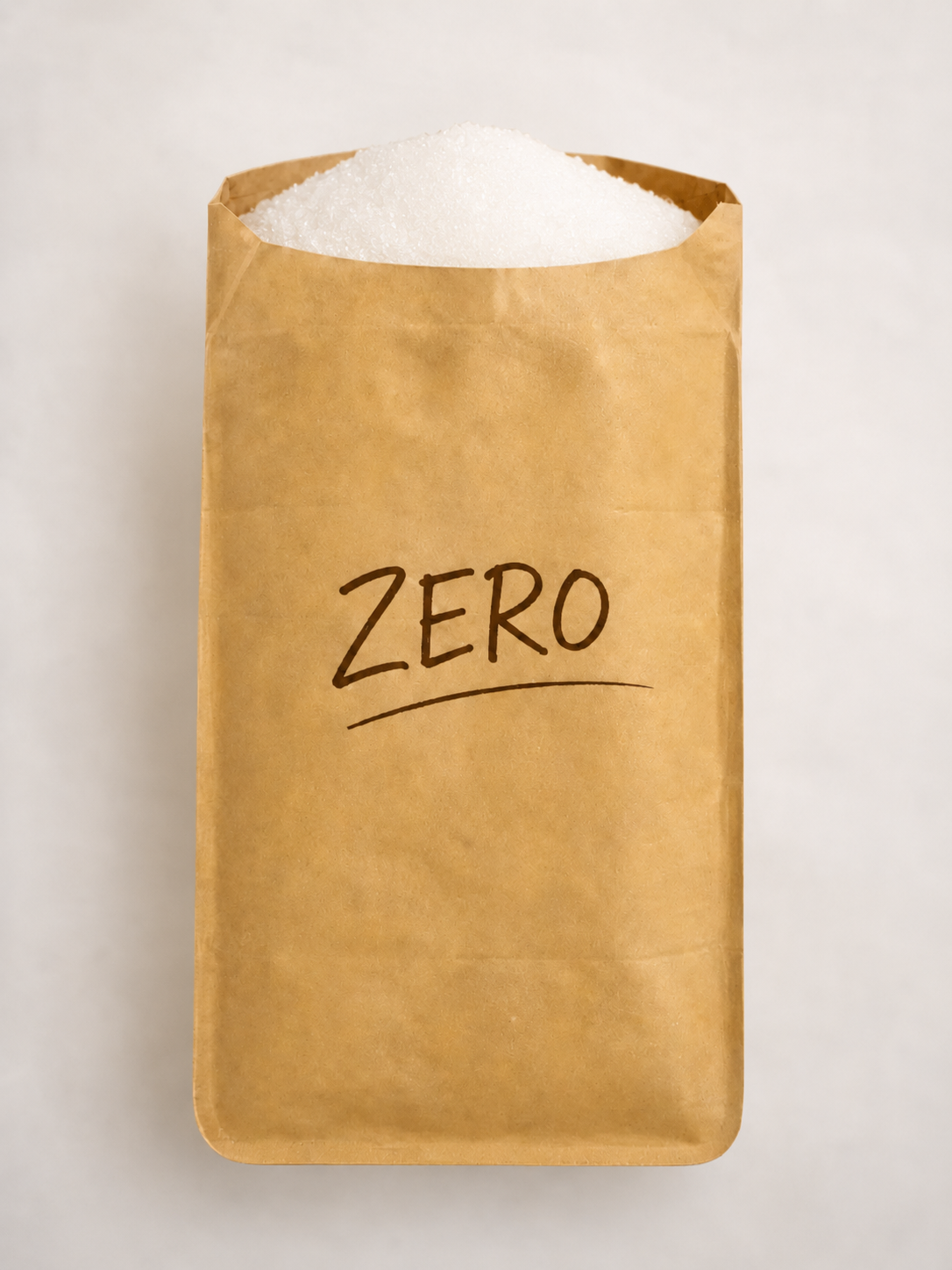 From the shop
BLANK ZERO Monk Fruit Sweetener
50g delivers the sweetness of 250g sugar. Zero glycemic impact, lab tested, FSSAI certified.
See it →₹400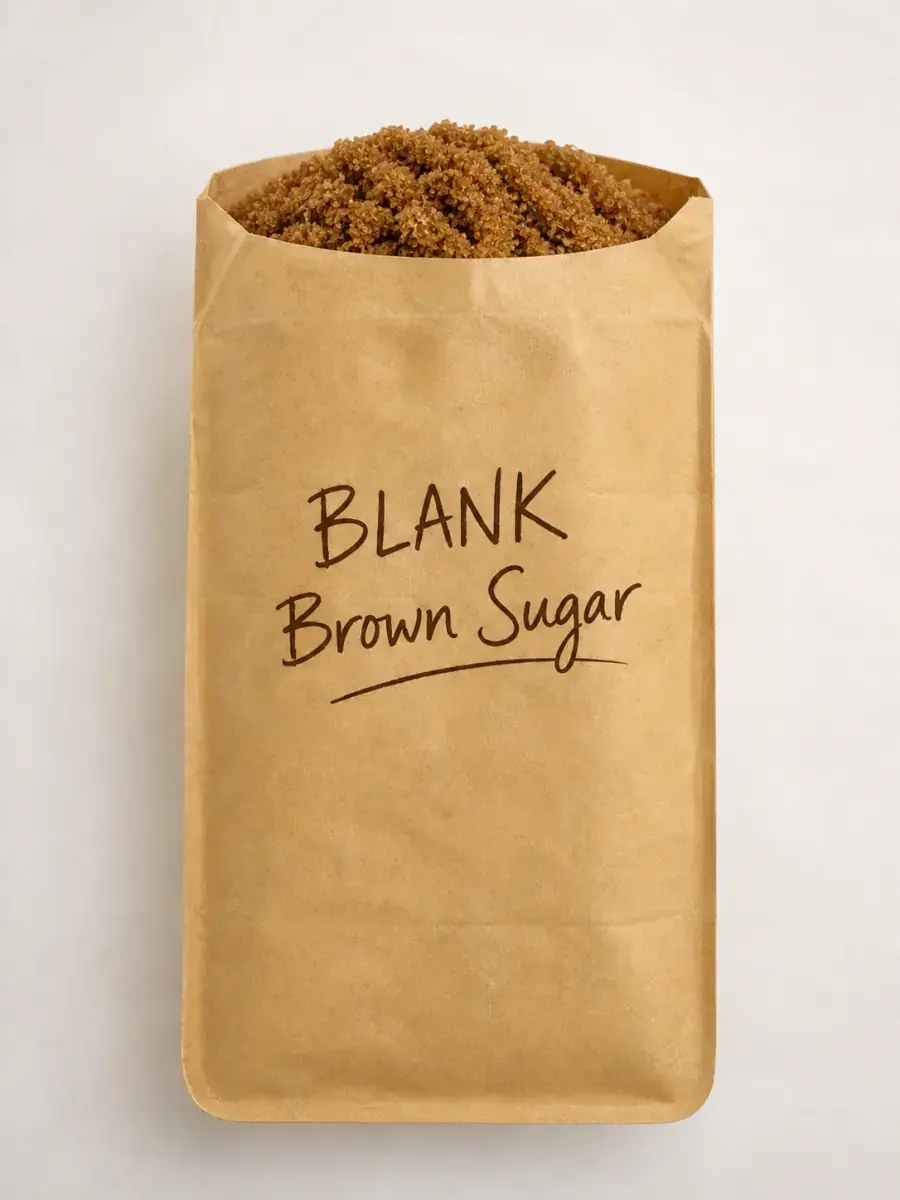 From the shop
BLANK Brown Sugar 250g
Single-origin Philippines brown sugar with natural molasses. The warm base note in most of our recipes.
See it →₹200