
Why an e-ink screen feels easier on your eyes (and where it does not help)
E-ink is not magic. It is physics: no backlight, no flicker, reflected light like paper. Here is what that fixes and what it cannot fix.
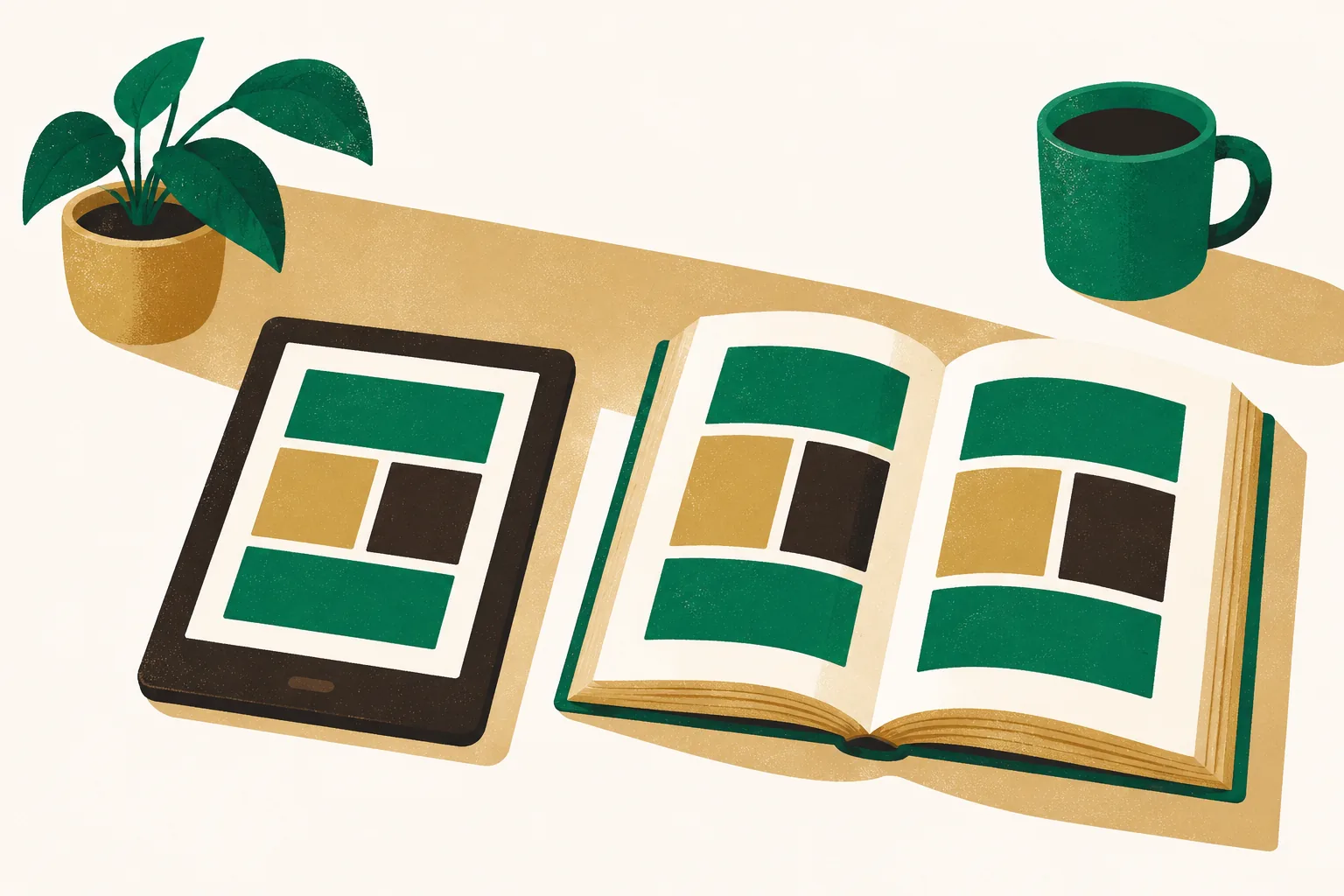
Short answer An e-ink display reflects ambient light instead of shining light into your eyes, refreshes without PWM flicker, and emits almost no blue light at night. That removes two of the three main drivers of screen fatigue: emissive glare and flicker. The third, sustained close focus, no screen technology fixes.
There is a version of the e-ink pitch that sounds like wellness marketing. Better sleep, calmer brain, healed eyes. Skip that version. The real case is more interesting because it is mostly physics.
What is actually different about an e-ink panel?
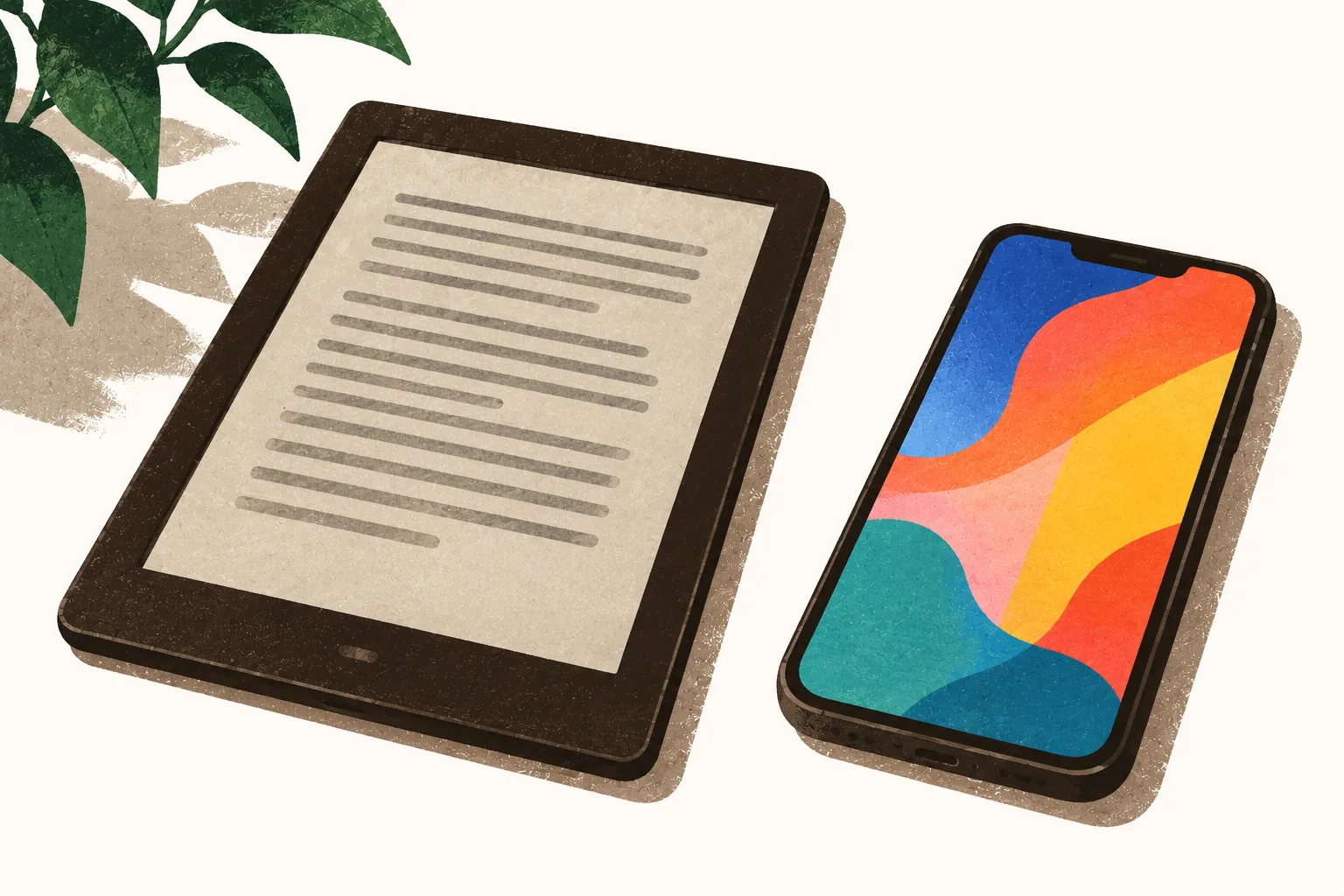
A phone OLED is a flashlight. Millions of tiny emitters push photons straight at your cornea, and your eyes handle it by squinting a little, blinking less, and working harder than they would at paper.
E-ink works the other direction. Charged pigment capsules move to the surface and reflect whatever light is already in the room. No emitter, no backlight beaming at you. In daylight it reads like printed card because, optically, it behaves like it.
The second difference is flicker. Most OLED and LCD screens dim using pulse-width modulation, switching the backlight on and off hundreds of times per second. Some people are not bothered. Some people get headaches and cannot say why until they stop using the screen. E-ink does not do this at all; the image is stable until it changes.
Does any of this show up in studies?
The strongest adjacent evidence is about light at night. Reading on a self-luminous device before bed suppressed evening melatonin and delayed sleep compared to reading a printed book. [1] A front-lit e-ink screen at warm temperature sits much closer to the book end of that experiment than the iPad end.
On eye strain more broadly, the clinical review literature is careful: digital eye strain is real, multifactorial, and driven by reduced blink rate and sustained accommodation as much as by light output. [2] An e-ink screen removes glare and flicker. It does not make you blink more or focus less hard. Anyone who tells you otherwise is selling something. Including us.
What did we notice using one?
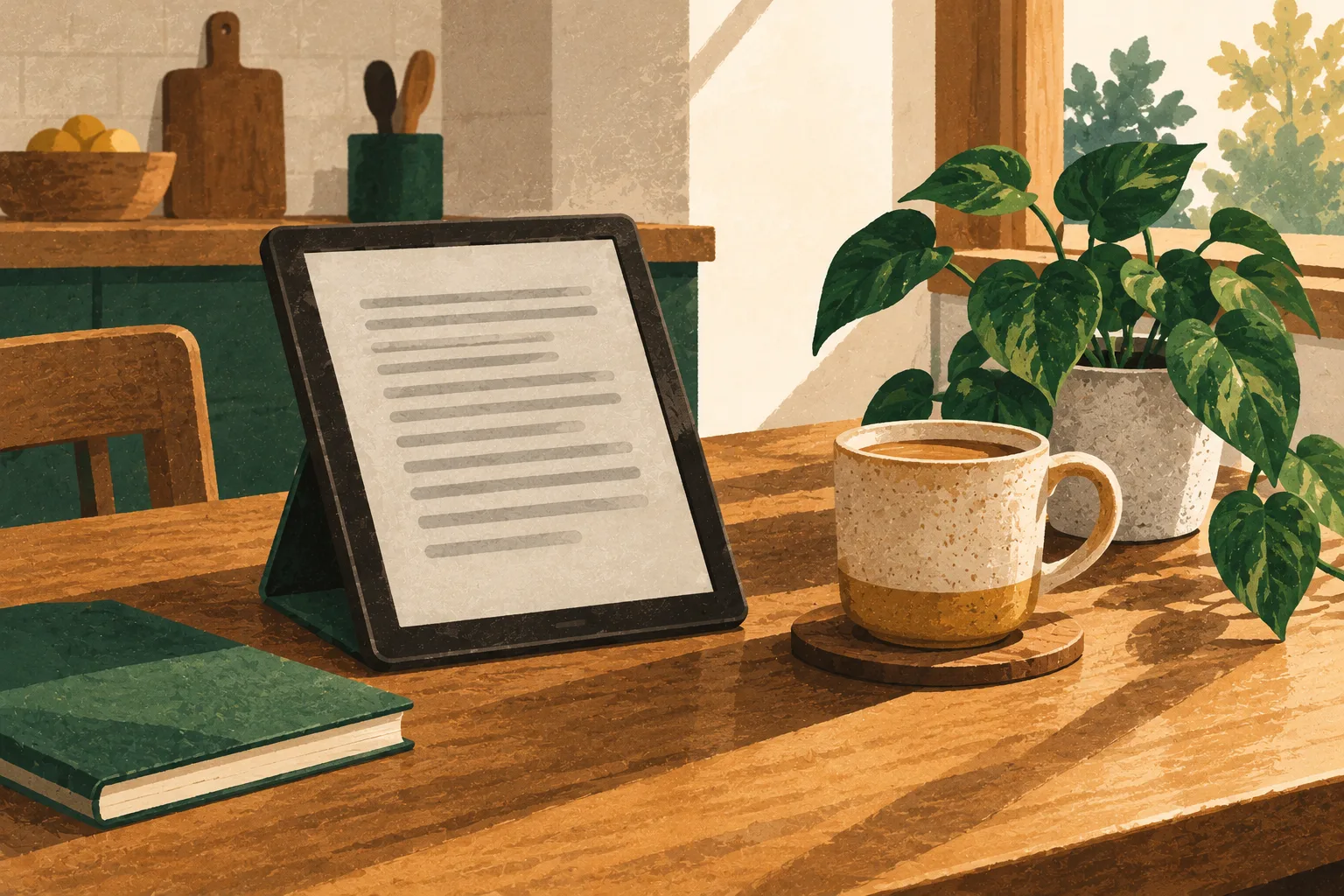
The honest report from our own use: reading is better, full stop. Three hours on an e-ink tablet feels closer to three hours with a paperback than three hours on a phone. Battery lasts most of a week, which changes your relationship with the charger in a way nobody warns you about.
The tradeoffs are real. Color e-ink is muted, closer to newsprint than to an iPad. Refresh takes a beat, and fast-scrolling a social feed ghost-images enough to be annoying. That last part turns out to be the hidden feature. A phone that is slightly bad at dopamine scrolling is a phone you pick up less.
Where e-ink does not help
Dry eyes from staring. Bad posture. Reading in the dark. None of those are screen problems; they are habit problems, and a reflective display does not fix them. If your eyes hurt after a 10-hour screen day, the first fix is shorter screen days and the 20-20-20 habit, not a new device.
The fair summary: e-ink removes the parts of screen fatigue that are the screen’s fault. The rest is still on you.
Common questions
Is e-ink better for your eyes than a phone screen?
For long reading, likely yes. E-ink reflects ambient light like paper and has no backlight or PWM flicker, which removes two known fatigue sources. It does not fix eye strain from close focus or reduced blinking.
Does e-ink emit blue light?
The panel itself emits nothing; it reflects room light. Front-lit e-ink devices have small LED guides, usually adjustable to warm tones, and emit far less blue light than an OLED at night.
Can e-ink devices play video or run apps?
Modern color e-ink runs Android apps, but refresh is slower and ghosting happens on fast content. It suits reading, messaging, and writing better than video or gaming.
Why do people call e-ink distraction-free?
Partly physics, partly friction. A slow-refreshing monochrome screen makes scrolling social feeds mildly annoying, which turns out to be a feature if your goal is less scrolling.
Mentioned in this article
 From the shop
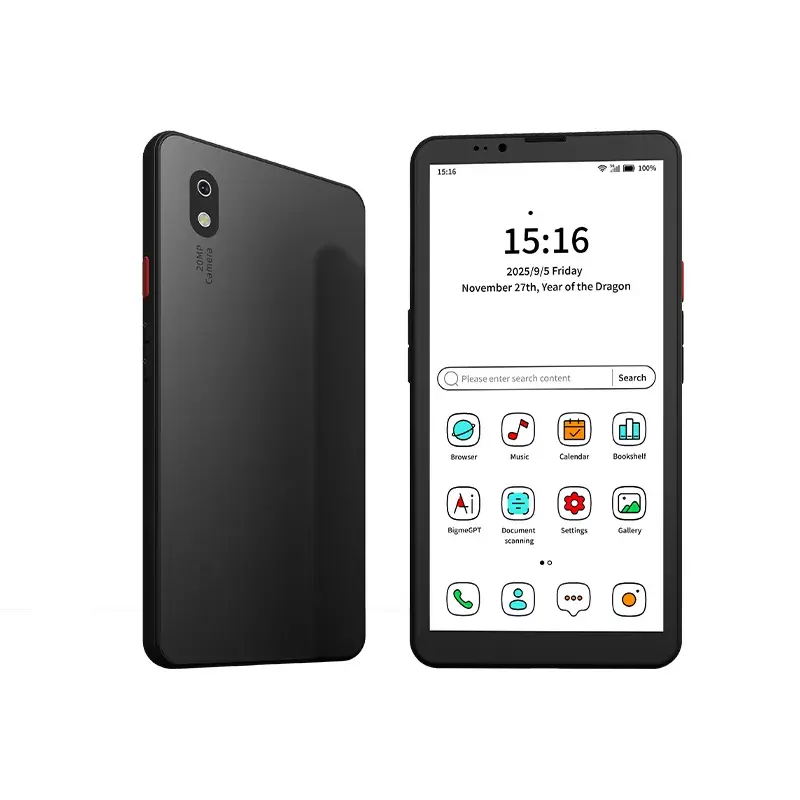
BIGME HiBreak Pro E-Ink Smartphone
A 6.13-inch color e-paper phone with 4G. The screen we reach for when our eyes are done with OLED.
See it →See store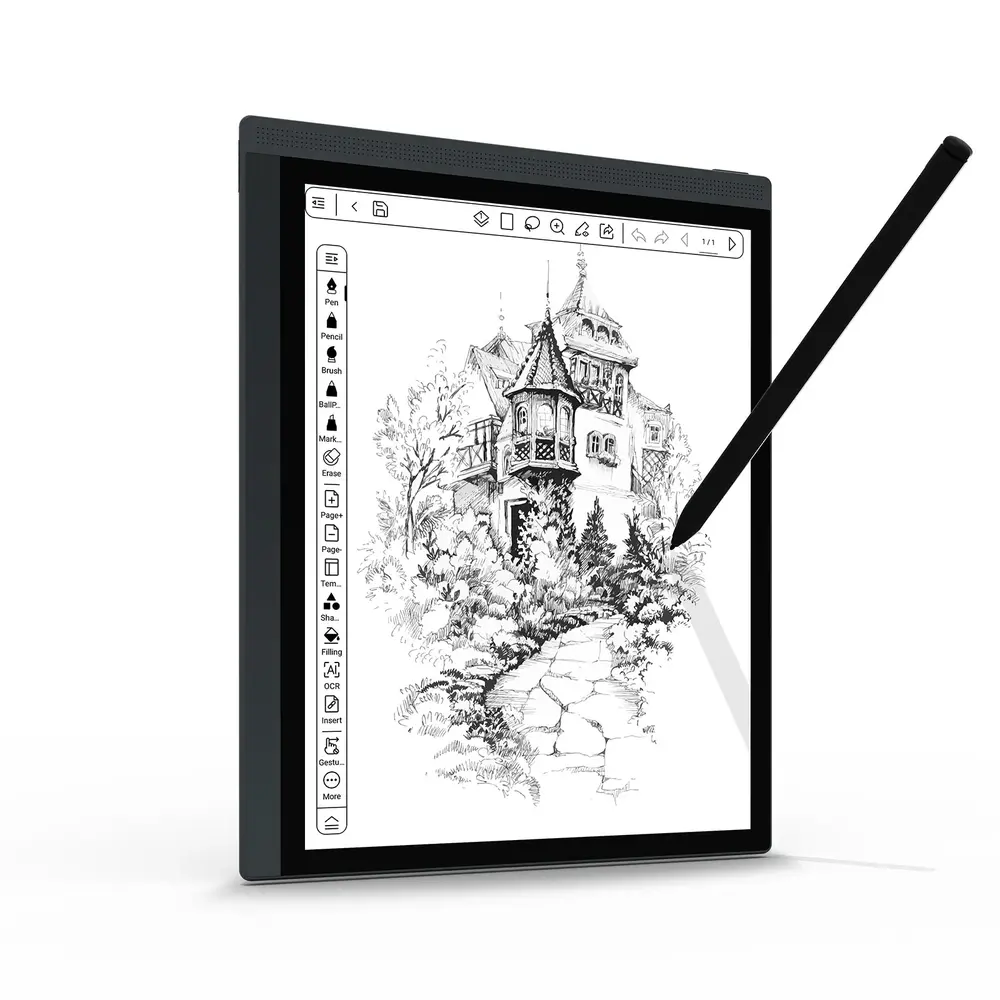 From the shop
BIGME B1051 E-Ink Tablet
10.3-inch black-and-white e-ink at 300ppi. Made for long reading and writing sessions.
See it →See store