
The 10-minute morning light habit: what it does to your sleep, and what it does not
Outdoor light within an hour of waking is the cheapest circadian lever that exists. Here is what the evidence supports, how much you need, and how to do it in Indian conditions.

Short answer Getting outside into daylight within an hour of waking is one of the most reliable ways to keep your body clock on time. Ten to thirty minutes is enough. It shifts melatonin release to the right hour at night, which is why evening sleepiness shows up when you want it. The catch: it has to be actual outdoor light, not your kitchen window.
Every health podcast eventually lands on the same advice: get sunlight in your eyes early in the day. It sounds like the kind of tip that is too simple to matter. It is also one of the few where the mechanism is genuinely well understood.
What does morning light actually do?
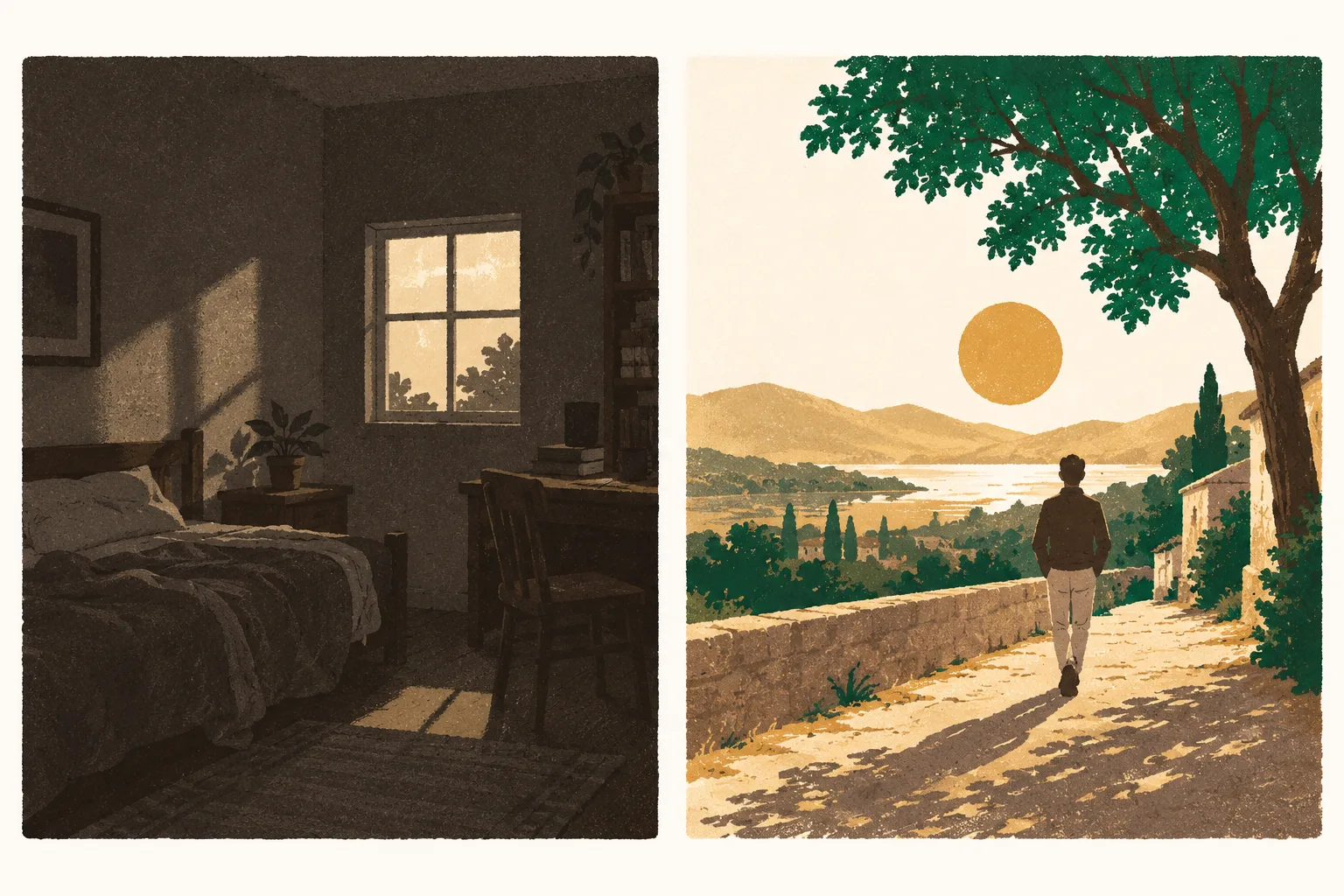
Your circadian clock is not set by willpower or by when you decide to sleep. It is set by light hitting specialized photoreceptors in your eye, which then time-stamp everything downstream: cortisol in the morning, melatonin roughly 14 to 16 hours later, body temperature, appetite signals.
Morning light pulls that clock earlier. Evening light pushes it later. The same study that showed room light before bed suppresses melatonin onset also implies the reverse: the earlier light exposure is what makes the evening signal land correctly. [1]
There is a reasonable amount of real-world support. A 2014 study found that morning light exposure correlated with lower body mass index independent of activity and calorie intake, suggesting the clock itself matters, not just behavior. [2] And a 2019 trial on habitual night owls showed that structured morning light and earlier wake times shifted their melatonin and cortisol rhythms earlier within three weeks, with reported improvements in sleepiness and mood. [3]
How do you actually do it?
The protocol in practice is almost embarrassingly simple.
| Condition | Time needed | Notes |
|---|---|---|
| Clear sunny morning | 10 min | Outside, no sunglasses |
| Overcast | 20 to 30 min | Still far brighter than indoors |
| Before sunrise wake-up | Get outdoor light when the sun is up | Bright indoor light is a partial bridge |
| Through a window | Mostly does not count | Glass cuts intensity massively |
You do not need to stare at the sun. Being outside in the ambient light is the signal. A balcony, a short walk, chai on the veranda, a parking-lot walk before sitting at a desk. The habit sticks when it attaches to something you already do.
Why window light does not count
This is the part people get wrong. Outdoor shade still delivers thousands of lux. A brightly lit room delivers a few hundred. Behind glass, less. Your melanopsin photoreceptors do not care that the window feels bright to you; they respond to actual photon flux, and indoors it is a rounding error compared to outside.
If you cannot get outside, a very bright indoor light setup is better than nothing, but it is a compromise, not a substitute.
What morning light does not fix
It will not cure insomnia as a medical condition. It will not override a 2am bedtime. It will not fix a disrupted clock from shift work on its own. It is the timing cue, not the entire system.
What it does do, reliably and for free, is tell your body when morning is. Most of the downstream sleep hygiene advice works better once that signal is anchored.
The honest bottom line
Ten minutes outside after waking is the cheapest real lever in sleep hygiene. It is not a supplement, not a protocol, and not something you can buy. It just works, which is why everyone keeps recommending it.
Common questions
How much morning light do I actually need?
Ten to thirty minutes outdoors within the first hour or two of waking is the common protocol. Overcast days need longer than clear ones. A bright balcony or veranda counts; you do not need to be in a field at sunrise.
Does morning light work through a window?
Poorly. Glass cuts a large share of the effective wavelengths and reduces intensity drastically. Indoor light is typically 100 to 500 lux; outdoor shade is thousands. Step outside or at least onto an open balcony.
Will morning light fix my insomnia?
It is a timing signal, not a sedative. It anchors your body clock so melatonin releases at the right hour that night, which helps sleepiness arrive on schedule. It does not treat insomnia as a condition.
What if I wake up before sunrise?
Get the brightest light you can at your wake time, then get outdoor light once the sun is actually up. A bright indoor setup is a partial substitute, not an equivalent one.
Mentioned in this article
 From the shop
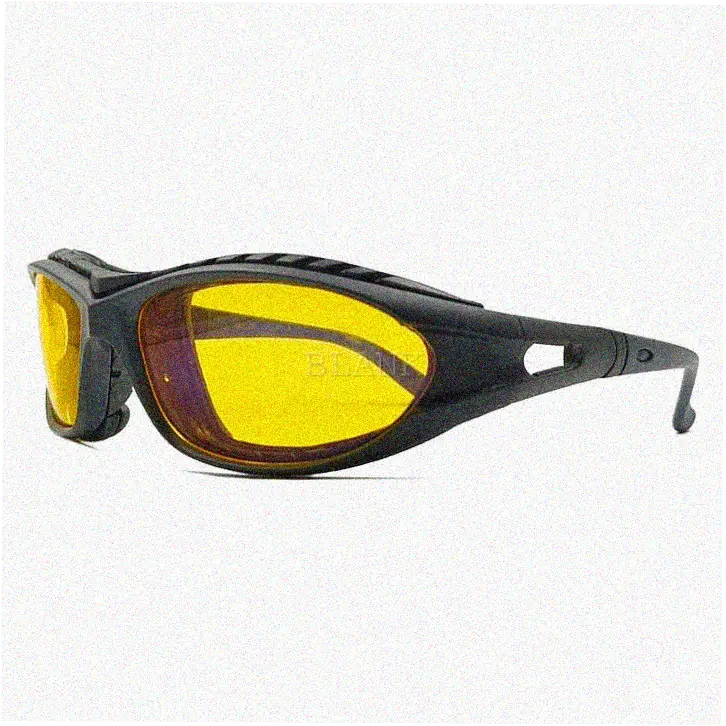
YellowLight DayLight Glasses
Blue-light filtering with enhanced contrast for high-focus daylight hours at a screen.
See it →₹5,413