
Creamy spinach and paneer skillet bowl with 28g protein
Cook this 15-minute creamy spinach and paneer skillet bowl with 28g protein and 6g net carbs using heat-stable dairy fat and spice matrix synergy.
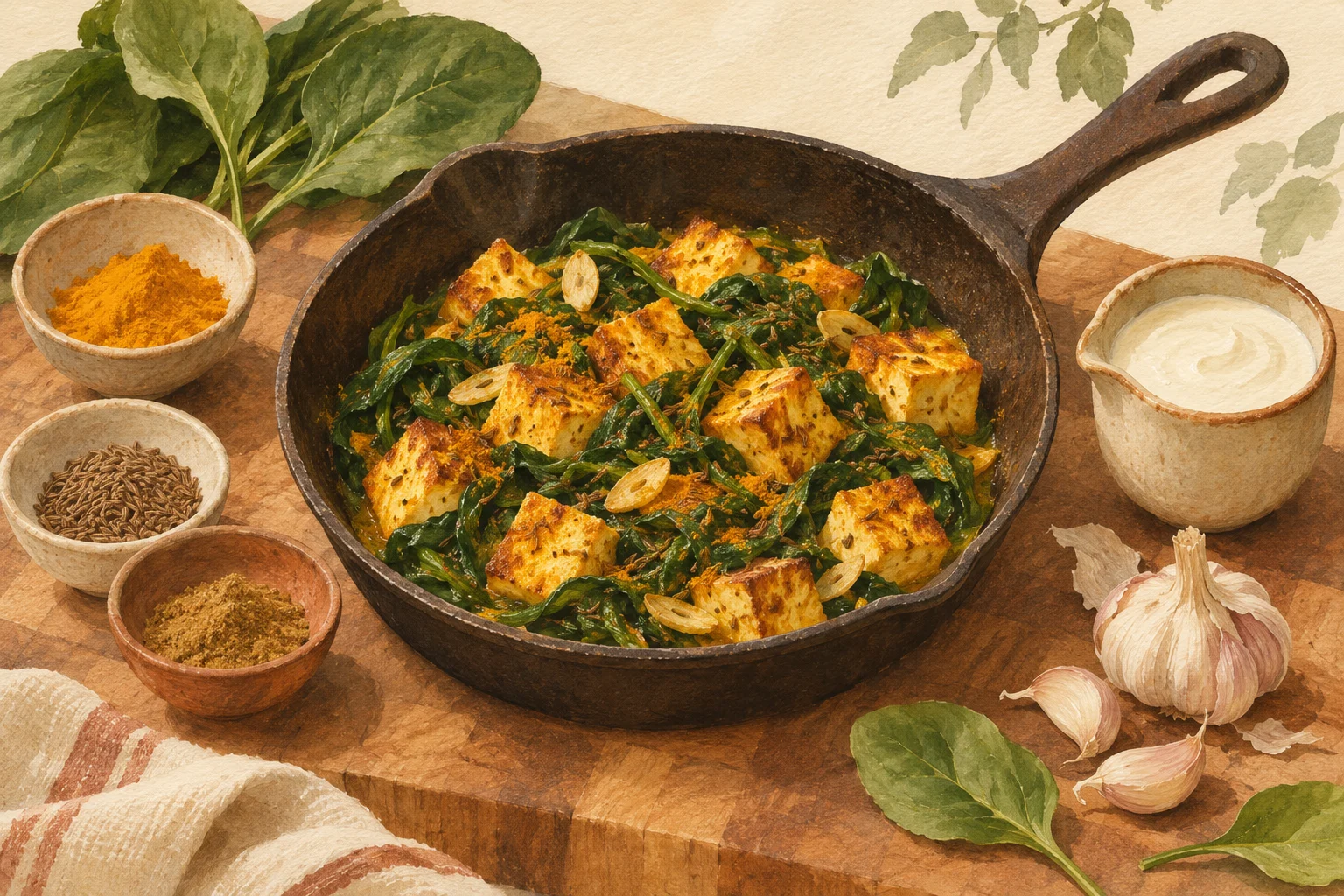
Short answer This 15-minute spinach and paneer skillet bowl delivers 28 grams of protein and 6 grams of net carbs by combining seared paneer cubes with wilted spinach, garlic, and cream. The milk fats enhance the absorption of lipophilic spice phytochemicals while dairy casein provides sustained leucine delivery, stabilizing postprandial glucose and suppressing ghrelin.
28g protein · 6g net carbs · 310 cal · 15 min
A seasoned cast iron skillet heated to 175 degrees Celsius creates an ideal contact surface for whole milk paneer. Cold cubes of cheese hit the hot fat, releasing moisture as surface proteins brown without melting the curd structure. Within ten minutes, the kitchen fills with toasted cumin, raw ginger, and the faint, sweet aroma of reducing dairy cream.
Traditional saag dishes often simmer greens for an hour until they lose their bright character. This skillet method treats spinach as a quick-wilted leafy vehicle, preserving chlorophyll and structural folate while sealing dairy peptides against overcooking. The result is a dense, high-protein bowl that keeps net carbohydrates under 7 grams per serving.
Why does pairing paneer with lipid-rich spices improve polyphenol absorption?
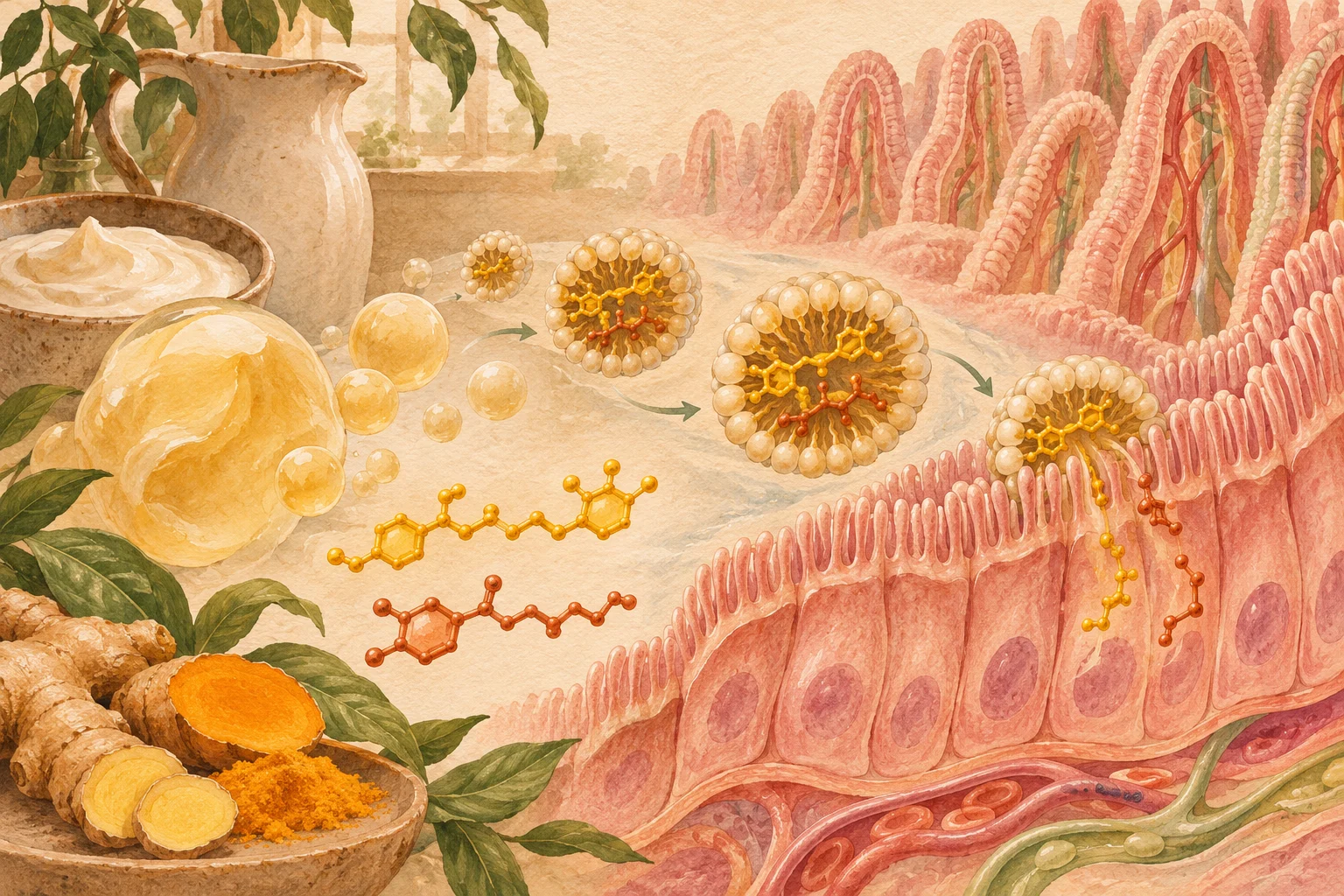
Curcumin from turmeric, gingerols from fresh ginger, and caraway-related terpenes in cumin are hydrophobic compounds. When bloomed in dry pans or water bases, their intestinal permeability remains low. Heating these spices in dairy fats creates lipid micelles that solubilize active phytochemicals before they reach the small intestine.
Recent work on digestive matrices shows that co-ingesting spices with milk fat globules significantly alters phytochemical release profiles [1]. The milk fat membrane and short-chain triglycerides enhance the bioaccessibility of lipophilic polyphenols compared to isolated powders taken with water. Ghee and paneer fats stabilize these molecules against rapid thermal oxidation during the brief sear.
This biochemical synergy mirrors the nutrient delivery seen across whole-food functional preparations. Just as we recommend evening snacks like Pop Off! Clean Popcorn Kernels for clean polyphenol delivery from whole hulls, using real dairy lipids ensures that your culinary spices perform biological work rather than passing unabsorbed through the GI tract.
How does dairy casein alter amino acid delivery compared to plant protein?
Paneer is primarily coagulated casein, a slow-digesting protein network formed through acid precipitation of hot milk. Unlike whey, which causes a rapid spike and subsequent drop in plasma amino acids, casein coagulates in the acidic gastric environment. This slow gastric emptying provides a steady stream of leucine into circulation for up to five hours.
While plant-derived amino acid blends offer distinct benefits for insulin sensitivity, their individual branched-chain amino acid densities vary widely across crop sources [2]. Paneer delivers roughly 2.7 grams of leucine per 100 grams of cheese. This concentration effortlessly triggers muscle protein synthesis thresholds without demanding high volumes of accompanying starch.
| Protein Base | Protein (g) | Net Carbs (g) | Total Fat (g) | Leucine (g) |
|---|---|---|---|---|
| Whole Milk Paneer | 36.0 | 4.2 | 42.0 | 3.4 |
| Firm Soy Tofu | 17.6 | 3.8 | 9.2 | 1.4 |
| Low-Fat Paneer Blend | 42.0 | 5.8 | 14.0 | 4.1 |
| Cooked Chickpeas | 14.2 | 44.8 | 4.2 | 1.0 |
For home cooks seeking alternative casein sources for quick meals, our high-protein cottage cheese chocolate mousse uses a similar milk curd baseline to achieve identical sustained-release satiety. In savory formats, paneer holds its physical cube shape under high skillet heat, providing a firm bite that soft curd cheeses cannot sustain.
What happens to central satiety signaling when dietary fat meets high protein?
Ingesting protein alongside milk lipids triggers a coordinated neuroendocrine cascade between the gut, adipose tissue, and the hypothalamus. Cholecystokinin and peptide YY release from intestinal L-cells rises rapidly in response to intact dairy peptides and long-chain fatty acids. This combined signal slows antral contractions in the stomach, directly communicating fullness to the vagus nerve.
Disruptions along the adipose tissue and central nervous system axis often impair natural hunger downregulation during energy-dense meals [3]. Meals that combine dense protein with structured dairy fats help normalize these metabolic pathways by reducing postprandial glucose volatility. Without rapid glucose peaks, systemic insulin demands stay low, preventing the reactive hypoglycemia that drives compulsive evening snacking.
Spinach contributes significant dietary volume through water and structured cellulose without adding significant caloric density. As the leaves wilt into the cream emulsion, their soluble fiber forms a gel that traps fat droplets. This physical matrix delays intestinal transit time, prolonging satiety signals throughout the evening.
How do you cook this fifteen-minute skillet without over-reducing the greens?
Managing pan temperature is the central technical challenge of this preparation. Cast iron retains significant heat, meaning you must turn off the burner before you think the greens are finished. Residual thermal energy carries the cream to its final viscosity while keeping the spinach tender.
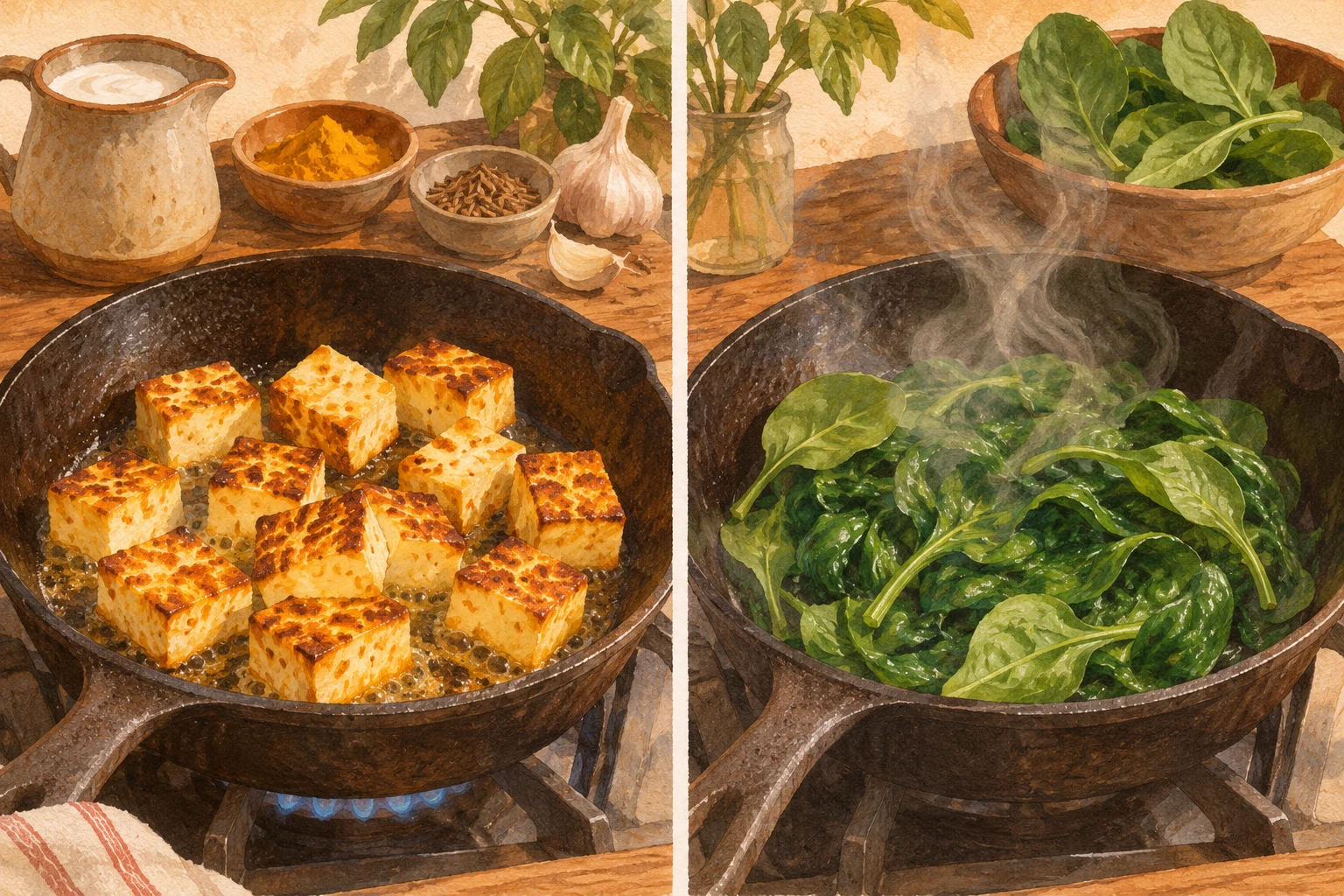
Start by searing the cubed paneer in clarified butter over medium heat until two sides develop a deep copper crust. Push the browned cubes toward the edge of the skillet where radiant heat is lower, leaving the center open for the aromatics. Cook the sliced garlic and grated ginger in the center fat for only forty seconds, then add your dry spices directly into the bubbling oil.
Add the washed spinach leaves in two distinct rounds, using metal tongs to turn the raw leaves beneath the warm cheese cubes. As soon as the greens shrink by half, turn off the flame completely. Pour the heavy cream over the pan, sprinkle your sea salt, and fold everything together for sixty seconds as the skillet cools into a silky, emulsified sauce.
Common questions
Can I substitute tofu for paneer to keep the protein count high?
Firm tofu works as a one-to-one volume swap, though you will drop approximately 4 grams of protein per serving. You must press the tofu for 10 minutes beforehand to allow surface browning without excess water diluting the skillet emulsion.
How does this meal achieve 6 grams of net carbs?
A 150-gram serving of raw spinach contains roughly 5 grams of total carbohydrates with 3.3 grams of insoluble and soluble fiber. Combined with low-carbohydrate whole milk paneer and minimal heavy cream, the digestible carbohydrate load remains at 6 grams.
Can this skillet bowl be prepared ahead for meal prep?
You can store the cooked skillet in an airtight glass container for up to 3 days at 4 degrees Celsius. Reheat gently over medium-low heat with one tablespoon of water to restore the cream emulsion without breaking the milk fats.
Why cook the garlic and spices in fat before adding the spinach?
Heating ground spices in fat initiates lipid extraction of fat-soluble flavor compounds and active polyphenols. Adding leafy greens too early drops pan temperature and steams the spices instead of blooming them.
Mentioned in this article
 From the shop
Pop Off! Clean Popcorn Kernels
Non-GMO, pesticide-free popcorn. The biohacker afternoon snack.
See it →₹215